Can Dogs Eat Collard Greens? – Signs, Risks & Serving Sizes

Yes, dogs can eat collard greens in moderation. These leafy green vegetables contain fiber, vitamins, and antioxidants that can support your dog’s overall health. However, collard greens should be served plain, cooked, and in small amounts. Feeding too much may cause stomach upset or digestive issues.
If you enjoy eating collard greens, you may wonder if it’s safe to share some with your furry friend. The good news is that collard greens are not toxic to dogs. In fact, they can be a healthy addition to your dog’s diet when prepared correctly. Still, there are a few things every dog owner should know before offering this vegetable.
In this guide, you’ll learn the benefits, risks, serving sizes, and the safest way to feed collard greens to dogs.
Are Collard Greens Safe for Dogs?
Collard greens are generally safe for dogs to eat. They are packed with nutrients and can be a healthy treat when given in moderation. Many dog owners add small amounts of vegetables to their pet’s meals to provide extra vitamins and minerals.
While collard greens are safe, they should never replace a balanced dog food diet. Dogs get most of the nutrients they need from high-quality dog food. Vegetables like collard greens should only be offered as an occasional supplement or treat.
The safest way to serve collard greens is to cook them without adding salt, butter, garlic, onions, or other seasonings. Some ingredients commonly used in human recipes can be harmful to dogs.
If your dog has never eaten collard greens before, start with a very small amount. This helps you see how their stomach reacts and reduces the risk of digestive upset.
Nutritional Value of Collard Greens for Dogs
Collard greens contain several nutrients that may benefit your dog’s health.
| Nutrient | Potential Benefit |
| Fiber | Supports healthy digestion |
| Vitamin A | Helps maintain healthy vision |
| Vitamin C | Supports the immune system |
| Vitamin K | Helps with normal blood clotting |
| Calcium | Supports strong bones and teeth |
| Antioxidants | Help protect cells from damage |
| Iron | Supports healthy blood function |
These nutrients make collard greens one of the healthier vegetables that dogs can enjoy in moderation.
Health Benefits of Collard Greens for Dogs

Supports Healthy Digestion
Collard greens contain dietary fiber, which can help support healthy digestion. Fiber helps food move through the digestive tract and may improve stool quality.
For dogs that occasionally struggle with mild constipation, small amounts of fiber-rich vegetables may be helpful. However, too much fiber can have the opposite effect and may cause loose stools or gas.
Helps Maintain a Healthy Weight
Collard greens are low in calories and fat. This makes them a good treat option for dogs that need to maintain a healthy weight.
Many commercial dog treats contain extra calories that can add up quickly. Replacing some treats with small portions of vegetables may help reduce calorie intake while still giving your dog something tasty to enjoy.
Provides Important Vitamins and Minerals
Dogs need a variety of nutrients to stay healthy. Collard greens contain several vitamins and minerals that support different functions in the body.
Vitamin A supports eye health and skin health. Calcium helps maintain strong bones and teeth. Vitamin K plays a role in normal blood clotting. Together, these nutrients contribute to overall wellness.
Supports the Immune System
Collard greens contain vitamin C and antioxidants that may help support the immune system. Antioxidants work by helping protect cells from damage caused by free radicals.
While dogs naturally produce their own vitamin C, additional dietary sources may still provide some benefits when included as part of a balanced diet.
Contains Natural Antioxidants
Antioxidants are compounds that help protect the body’s cells. Collard greens contain several plant-based antioxidants that may support long-term health.
These compounds are found naturally in many leafy green vegetables and are one reason why vegetables are often considered healthy additions to a dog’s diet.
Can Dogs Eat Cooked Collard Greens?
Yes, cooked collard greens are generally the best option for dogs. Cooking softens the leaves and makes them easier to chew and digest. Steaming or boiling collard greens without seasoning is usually the safest preparation method.
When preparing collard greens for your dog:
- Wash them thoroughly.
- Remove thick stems.
- Steam or boil until soft.
- Let them cool before serving.
- Cut them into small pieces.
Avoid adding:
- Salt
- Garlic
- Onion
- Butter
- Oils
- Spicy seasonings
Many recipes made for people contain ingredients that can be dangerous for dogs. Plain is always best.
Can Dogs Eat Raw Collard Greens?
Dogs can eat raw collard greens, but cooked greens are usually a better choice. Raw collard greens are tougher and harder to digest. Some dogs may experience gas, bloating, or stomach discomfort after eating raw leafy vegetables.
Large raw leaves may also be difficult for smaller dogs to chew properly. If you decide to offer raw collard greens, chop them into very small pieces and only give a small amount.
Most veterinarians recommend cooked collard greens because they are gentler on the digestive system and easier for dogs to process.
Can Puppies Eat Collard Greens?
Puppies can eat small amounts of collard greens, but extra care is needed. A puppy’s digestive system is still developing. New foods should be introduced slowly to avoid stomach problems.
If you want to give your puppy collard greens:
- Use cooked greens only.
- Offer a very small amount.
- Watch for diarrhea or vomiting.
- Avoid giving large portions.
Puppies should get most of their nutrition from a complete puppy food formula. Vegetables should only be occasional treats and not a major part of their diet.
How Much Collard Greens Can Dogs Eat?
Even healthy foods should be fed in moderation. Giving your dog too many collard greens at once may lead to stomach upset, gas, or diarrhea.
A good rule is to treat collard greens as an occasional snack rather than a daily meal ingredient. Start with a small amount and increase slowly if your dog tolerates it well.
Suggested Serving Sizes
| Dog Size | Recommended Amount |
| Small Dogs | 1–2 teaspoons |
| Medium Dogs | 1–2 tablespoons |
| Large Dogs | 2–4 tablespoons |
Remember that treats and extras should make up only a small part of your dog’s daily diet. Most of their nutrition should still come from a complete and balanced dog food.
If your dog has never eaten collard greens before, start with half the suggested amount and monitor for any digestive issues.
Potential Risks of Feeding Collard Greens to Dogs
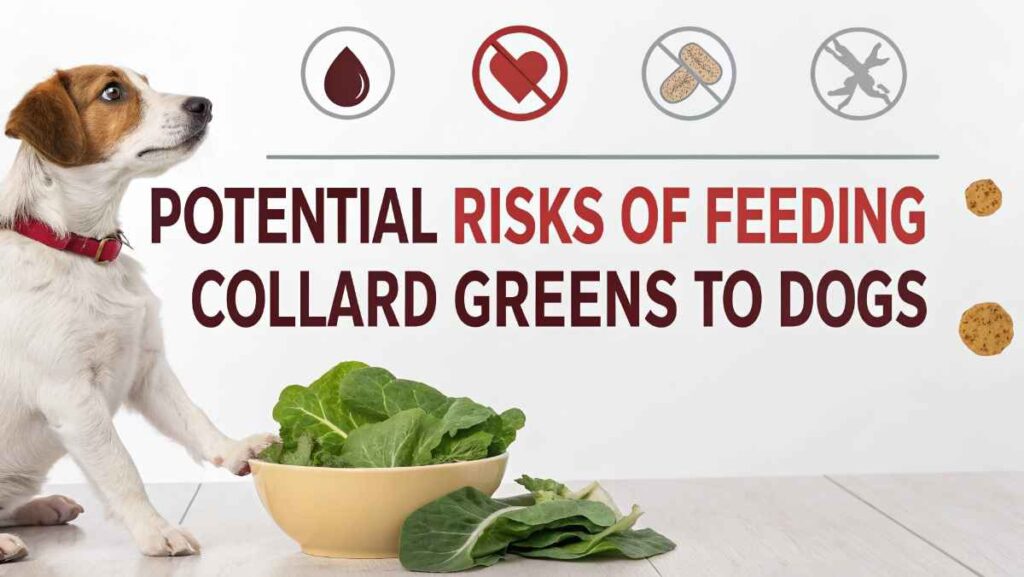
While collard greens offer several health benefits, there are also some risks to consider.
Digestive Upset
Some dogs have sensitive stomachs and may not tolerate leafy greens well. Eating too many collard greens can cause vomiting, diarrhea, or stomach discomfort.
If your dog experiences digestive problems after eating collard greens, stop feeding them and return to their normal diet.
Gas and Bloating
Collard greens contain fiber and natural plant compounds that can cause gas in some dogs. Mild gas is usually not serious, but excessive bloating can make your dog uncomfortable.
Serving smaller portions can help reduce this problem.
Oxalates and Kidney Concerns
Collard greens contain natural compounds called oxalates. In large amounts, oxalates may contribute to kidney or bladder stone problems in dogs that are already prone to these conditions.
Most healthy dogs can safely enjoy small portions of collard greens. However, dogs with a history of urinary or kidney issues should be discussed with a veterinarian before adding collard greens to their diet.
Choking Hazard from Tough Stems
The thick stems of collard greens can be difficult to chew, especially for small dogs.
Large pieces may become a choking hazard or cause digestive discomfort. Always remove tough stems and cut the leaves into bite-sized pieces before serving.
Problems with Seasoned Collard Greens
Many collard green recipes include ingredients that are unsafe for dogs.
Avoid feeding collard greens that contain:
- Garlic
- Onions
- Excess salt
- Butter
- Spicy seasonings
- Bacon grease
Even if the collard greens themselves are safe, added ingredients may cause health problems.
Which Dogs Should Avoid Collard Greens?
Most healthy dogs can enjoy collard greens occasionally. However, some dogs may need to avoid them or eat them only under veterinary guidance.
Dogs that may need extra caution include:
- Dogs with kidney disease
- Dogs prone to bladder stones
- Dogs with chronic digestive problems
- Dogs with food sensitivities
- Dogs recovering from stomach illness
If your dog has an existing medical condition, ask your veterinarian before introducing any new food.
What Happens If a Dog Eats Too Many Collard Greens?
A small extra bite is usually not a problem. However, eating a large amount of collard greens may lead to digestive issues.
Common symptoms include:
- Vomiting
- Diarrhea
- Gas
- Bloating
- Stomach pain
- Reduced appetite
- Loose stools
These symptoms are often mild and improve within a day or two. Make sure your dog has access to fresh water and monitor their condition closely.
When Should You Call a Veterinarian?
Contact your veterinarian if your dog:
- Vomits repeatedly
- Has severe diarrhea
- Refuses food for more than 24 hours
- Shows signs of pain
- Appears weak or lethargic
- Has difficulty breathing
While serious problems are uncommon, it is always better to seek professional advice if symptoms seem severe.
How to Prepare Collard Greens for Dogs
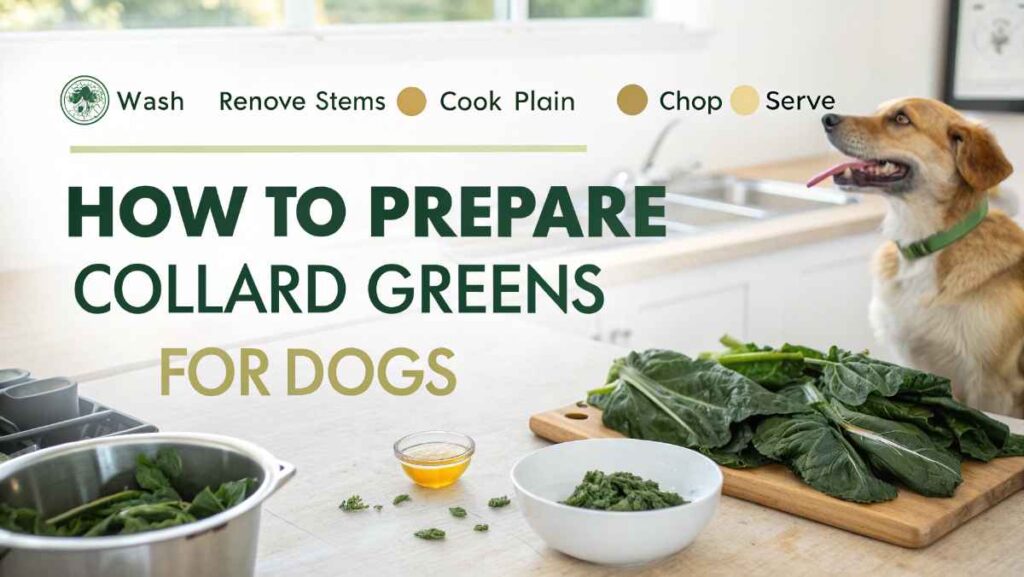
Step 1: Wash Thoroughly
Rinse the collard greens well under running water. This helps remove dirt, pesticides, and other unwanted substances that may be left on the leaves.
Step 2: Remove Thick Stems
Cut away the thick stems before serving. They can be hard to chew, difficult to digest, and may become a choking hazard for some dogs.
Step 3: Cook Without Seasoning
Steam or boil the leaves until they become soft.
Do not add:
- Salt
- Garlic
- Onion
- Butter
- Oils
- Seasonings
Step 4: Chop into Small Pieces
After cooking, chop the leaves into small pieces. Smaller bites are easier for dogs to chew, swallow, and digest without causing discomfort.
Step 5: Serve in Moderation
Offer only a small amount of collard greens as an occasional treat. Too much can cause gas, diarrhea, or other digestive issues.
Following these simple steps helps make collard greens safer and easier for your dog to enjoy.
Best Vegetables Dogs Can Eat
Collard greens are just one of many vegetables that dogs can safely enjoy.
Safe Vegetables for Dogs
| Vegetable | Safe for Dogs? |
| Collard Greens | Yes |
| Carrots | Yes |
| Green Beans | Yes |
| Sweet Potatoes | Yes |
| Broccoli | Yes (small amounts) |
| Pumpkin | Yes |
| Cucumber | Yes |
| Peas | Yes |
These vegetables can provide extra nutrients while adding variety to your dog’s diet. Always introduce new foods gradually and monitor your dog’s reaction.
Can Dogs Eat Collard Greens Cooked?
Yes, dogs can eat cooked collard greens. In fact, cooked greens are easier to digest than raw ones. Serve them plain without salt, garlic, onions, or seasonings. Small portions can provide fiber, vitamins, and minerals that support your dog’s overall health.
Can Dogs Eat Collard Greens Stems?
It is best not to feed collard green stems to dogs. The stems are tough, difficult to chew, and may become a choking hazard, especially for small dogs. Remove the stems before serving and offer only the soft leaves for safer digestion.
Can Dogs Eat Collard Greens in the Winter?
Yes, dogs can eat collard greens during the winter. The season does not change their safety. As long as the greens are fresh, clean, and properly cooked, they can be a healthy treat that adds extra nutrients to your dog’s diet.
Can Dogs Eat Canned Collard Greens?
Canned collard greens are not the best choice for dogs. Many canned products contain added salt, preservatives, and seasonings that may be harmful. If possible, choose fresh collard greens and cook them plain to provide a safer and healthier treat.
Frequently Asked Questions
Can Dogs Eat Collard Greens Every Day?
It is usually better to offer collard greens occasionally rather than every day. Too much fiber may upset your dog’s digestive system.
Can Dogs Eat Collard Greens Cooked with Bacon?
No. Bacon contains high amounts of fat and salt. Many bacon-based recipes also include seasonings that are not safe for dogs.
Can Diabetic Dogs Eat Collard Greens?
Collard greens are low in calories and contain fiber, but every diabetic dog has different nutritional needs. Consult your veterinarian before adding new foods.
Can Dogs Eat Frozen Collard Greens?
Yes, as long as they are plain and free from added ingredients. Cook them before serving for easier digestion.
Can Pets Eat Collards?
Yes, many pets can eat collards in moderation. For dogs, plain cooked collards provide fiber and nutrients without adding many calories.
Is It Safe to Add Collard Greens to Homemade Dog Food?
Yes, collard greens can be added to homemade dog food. Cook them plain and use small amounts to support balanced nutrition.
Final Verdict
Yes, dogs can eat collard greens when they are served properly and in moderation. These leafy greens contain fiber, vitamins, minerals, and antioxidants that may support overall health.
Cooked collard greens are generally the safest option because they are easier to digest than raw leaves. Always serve them plain without salt, garlic, onions, or other seasonings.
While most healthy dogs can enjoy collard greens as an occasional treat, dogs with kidney problems, bladder stone issues, or sensitive stomachs may need extra caution.
When introduced slowly and fed in reasonable portions, collard greens can be a healthy addition to your dog’s treat rotation and a simple way to add variety to their diet.