
No, dogs should not eat cactus. While most cacti are not highly toxic, their sharp spines and irritating plant compounds can cause mouth injuries, stomach upset, and digestive problems. Even safer varieties like nopales should only be offered plain, cooked, and in very small amounts, while toxic species such as some Euphorbia plants should always be avoided.
In this article, you’ll learn whether dogs can eat cactus, why it can be dangerous, the symptoms to watch for, and the safest steps to protect your dog.
Is Cactus Safe for Dogs?
Cactus is usually not toxic, but that does not mean it is safe. This is where many pet owners get confused. “Non-toxic” only means the plant does not contain strong poison. But cactus still has sharp spines and irritating sap, which can harm your dog.
When a dog bites a cactus:
- Spines can stick into the mouth, tongue, or throat
- The plant can irritate the stomach
- It may cause pain and discomfort
So even if it’s not poisonous, cactus is still dangerous for dogs.
Is Cactus Good for Dogs?
No, cactus is not good for dogs. While some cactus varieties contain vitamins and fiber, the sharp spines and tough plant parts can injure your dog’s mouth and stomach. Dogs can get the same nutrients from safer fruits and vegetables without the risks.
Is Cactus Bad for Dogs?
Yes, cactus can be bad for dogs. The sharp spines may cause painful cuts, choking, or internal injuries, while some species can upset the stomach. It is best to keep your dog away from cactus plants to avoid accidental harm.
Can Dogs Have Cactus?
Dogs should not have cactus. Even if the plant is not highly toxic, its sharp spines and rough texture can hurt your dog’s mouth, throat, and digestive system. Safer treats are a much better choice for your pet.
Why Cactus Is Dangerous for Dogs
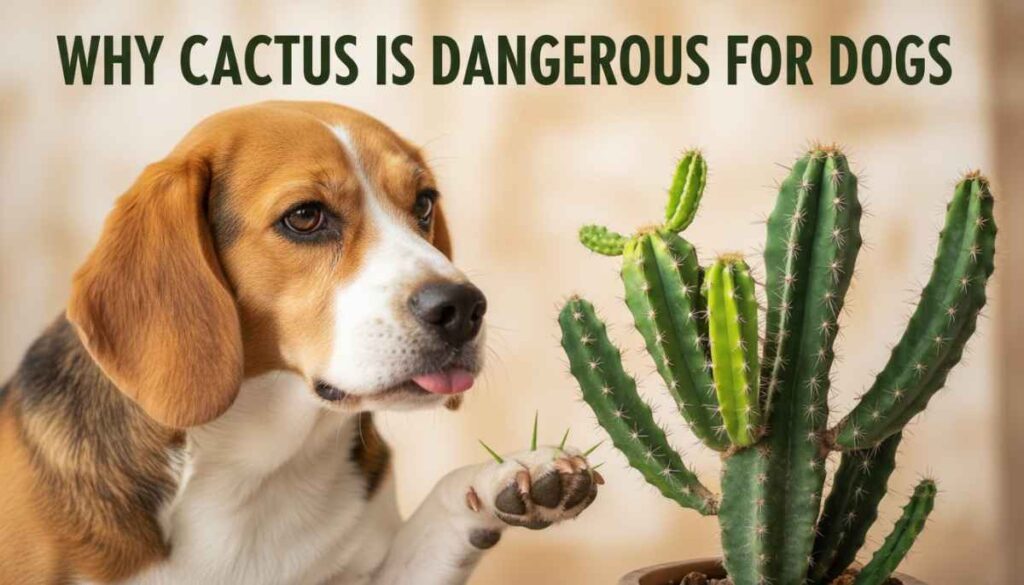
Sharp Spines and Physical Injuries
This is the biggest risk. Cactus plants are covered in sharp spines that can easily hurt your dog.
These spines can:
- Stick into lips, gums, and tongue
- Get stuck in paws
- Cause swelling and infection
If your dog swallows spines, the damage can be worse. The spines may scratch the throat or stomach.
Stomach Irritation and Digestive Issues
Cactus plants contain natural substances that can irritate your dog’s stomach.
After eating cactus, your dog may:
- Vomit
- Have diarrhea
- Feel uncomfortable or restless
Even a small amount can upset sensitive dogs.
Risk of Internal Damage
If a dog swallows cactus spines, they can cause internal problems.
Possible issues include:
- Cuts inside the throat or stomach
- Bleeding
- Pain while eating or drinking
This is why cactus is more dangerous than many other plants.
Toxic Cactus Varieties
While most cactus plants are not toxic, some types can be harmful.
Certain cactus plants have:
- Irritating sap
- Mild toxins that affect dogs
These can cause:
- Skin irritation
- Eye irritation
- Stomach pain
So it’s always better to keep your dog away from all types of cactus.
Symptoms If a Dog Eats Cactus
If your dog eats cactus, you may notice signs quickly. Some symptoms are mild, while others can be serious.
Watch for these signs:
- Drooling more than usual
- Pawing at the mouth
- Vomiting
- Loss of appetite
- Swelling in the mouth
- Bleeding from gums or lips
- Limping (if spines stuck in paws)
- Low energy or weakness
If symptoms get worse or do not improve, you should contact a vet.
What to Do If Your Dog Eats Cactus

Act quickly but stay calm. Here’s what you should do:
1. Check Your Dog Carefully
Look at your dog’s:
- Mouth
- Lips
- Tongue
- Paws
See if any spines are stuck.
2. Remove Visible Spines
If you can see spines, try to remove them gently using tweezers.
Be careful:
- Do not push them deeper
- Hold your dog steady
- Stop if your dog is in pain
3. Rinse the Area
Use clean water to rinse:
- Mouth
- Paws
This helps remove small spines and reduce irritation.
4. Offer Fresh Water
Give your dog clean drinking water. This helps soothe the throat and reduce irritation.
5. Watch for Symptoms
Keep an eye on your dog for the next 24 hours.
6. Call a Vet If Needed
Contact a vet if your dog has:
- Continuous vomiting
- Bleeding
- Trouble eating
- Signs of pain
- Swelling
Early care can prevent serious problems.
Are Any Types of Cactus Safe for Dogs?
Some people ask about prickly pear cactus. This type is sometimes eaten by humans and is less harmful.
But for dogs:
- It must be completely free of spines
- Only a very small amount is okay
- It can still upset the stomach
So even “safer” cactus types are not recommended for dogs. It’s always better to choose foods made for dogs instead.
How to Prevent Dogs from Eating Cactus
Prevention is the best way to keep your dog safe.
Keep Cactus Out of Reach
- Place cactus plants on high shelves
- Avoid keeping them in areas where your dog plays
Train Your Dog
Teach simple commands like:
- “Leave it”
- “No”
This helps stop your dog from touching harmful plants.
Supervise Outdoor Time
If you have cactus plants in your garden:
- Watch your dog when outside
- Keep them away from risky areas
Use Barriers
You can:
- Fence off cactus plants
- Use pots or stands
This adds an extra layer of safety.
Healthier Alternatives to Cactus
Instead of cactus, give your dog safe and healthy treats.
Good options include:
- Carrots
- Apples (without seeds)
- Cucumbers
- Dog biscuits
- Cooked pumpkin
These foods are:
- Easy to digest
- Safe in small amounts
- Better for your dog’s health
Always introduce new foods slowly.
Succulents and Cacti Toxic to Pets
Some succulents and cacti can harm pets. While many are not highly toxic, they may cause stomach upset, skin irritation, or mouth injuries. Sharp spines also increase risk, so it’s safest to keep these plants away from curious dogs.
Cactus Eaten by Puppy
If a puppy eats cactus, it may feel pain from sharp spines and develop stomach upset. Puppies are more sensitive, so even small amounts can cause problems. Always check for injuries and contact a vet if symptoms appear or worsen.
Are Christmas Cactus Poisonous to Dogs?
Christmas cactus is generally considered non-toxic to dogs. However, eating too much of the plant can still cause vomiting, diarrhea, or stomach discomfort. It is best to stop your dog from chewing on any houseplants.
Are Cactus Plants Poisonous to Dogs?
Most cactus plants are not poisonous to dogs, but they can still be dangerous. The biggest risk comes from their sharp spines, which may cause painful injuries, while some species can also irritate your dog’s stomach.
Is a Christmas Cactus Poisonous to Dogs?
A Christmas cactus is generally not poisonous to dogs. However, eating it can still cause mild stomach upset like vomiting or diarrhea. It’s best to keep it out of reach to avoid discomfort or unnecessary digestive issues in your dog.
Can Dogs Eat Different Types of Cactus?
Can Dogs Eat Cooked Cactus?
Cooked cactus is safer than raw cactus because the spines are usually removed, but it is still not recommended. Many cooked cactus dishes contain salt, onions, garlic, or spices that can be harmful to dogs.
Can Dogs Eat Raw Cactus?
No, dogs should not eat raw cactus. The sharp spines can injure the mouth, tongue, throat, and stomach. Even spineless varieties may cause digestive upset, so it is best to keep raw cactus away from your dog.
Can Dogs Eat Cactus Leaves?
No, dogs should not eat cactus leaves or pads. Even if the spines are removed, the plant can still upset your dog’s stomach and may be difficult to digest. Offer dog-safe vegetables instead for a healthier snack.
Can Dogs Eat Christmas Cactus?
Dogs should not eat Christmas cactus. Although the plant is not considered toxic, chewing or swallowing it can still lead to mild stomach problems like vomiting or diarrhea. Keeping the plant out of reach is the safest option.
Can Dogs Eat Cactus Raw
Dogs should not eat raw cactus. The sharp spines can injure the mouth and throat, while the plant may upset the stomach. Even without spines, raw cactus is not a healthy or safe food choice for dogs.
Can Dogs Eat Cactus Cooked
Cooked cactus is softer and less harmful than raw, but it is still not ideal for dogs. It may cause mild stomach upset. Dogs do not need cactus in their diet, so safer, dog-friendly foods are a better option.
Can Dogs Eat Cactus Without Spines
Cactus without spines is less dangerous, but still not recommended for dogs. It can irritate the stomach and cause digestive problems. Even though it seems safer, it does not provide real health benefits for your dog.
Can Dogs Eat Prickly Pear Cactus?
Dogs should not eat prickly pear cactus. The spines can cause painful injuries, and the plant may upset your dog’s stomach. If the ripe fruit is completely peeled and free of seeds and spines, only a tiny amount is generally considered safer, but it is still not an ideal treat.
Can Dogs Eat Cactus Juice
Cactus juice is not a good choice for dogs. It may contain natural compounds or added sugar that can upset digestion. Even small amounts can cause stomach issues, so it’s safer to give your dog plain, fresh water instead.
Can Dogs Eat Cactus Fruit
Cactus fruit, like prickly pear, is not toxic but should be given carefully. It must be free of spines and skin. Even then, only small amounts are safe, as it can still cause stomach upset in some dogs.
Can Dogs Eat Cactus Seeds
Cactus seeds are not recommended for dogs. They can be hard to digest and may cause stomach discomfort or blockage in some cases. It’s best to avoid giving seeds and stick to foods that are safe and easy to digest.
Can Dogs Eat Cactus Pear Fruit
Cactus pear fruit is not toxic to dogs if fully cleaned and peeled. However, it should only be given in small amounts. Too much can upset your dog’s stomach, so it’s better as an occasional treat, not regular food.
Can Dogs Eat Nopales
Nopales, a type of cactus, are not toxic if cleaned and cooked properly. However, they can still upset your dog’s stomach. Small amounts may be okay, but it’s better to avoid feeding them regularly to your pet.
Can Dogs Eat Cooked Nopales?
Dogs can eat a small amount of plain cooked nopales if they are fully cleaned and contain no salt, onions, garlic, or spices. Even then, they are not necessary in a dog’s diet and should only be an occasional treat.
FAQs about Cactus for Dogs
Is a Christmas Cactus Toxic to Dogs?
No, Christmas cactus is not considered toxic to dogs. However, eating the plant may still cause mild stomach upset, including vomiting or diarrhea. It is best to prevent your dog from chewing on it.
Is Cooked Cactus Good for Dogs?
No, cooked cactus is not good for dogs. While plain cooked cactus is less risky than raw cactus, it offers little nutritional value and is often prepared with seasonings that can be harmful to dogs.
Is Cactus Poisonous?
Most cactus plants are not poisonous, but they are not safe for dogs to eat. The sharp spines can cause painful injuries, and some cactus species may irritate the mouth, skin, or stomach.
Are Prickly Pear Cactus Poisonous to Dogs?
Prickly pear cactus is generally not poisonous to dogs. However, its sharp spines and tiny glochids can injure the mouth and digestive tract, making it unsafe for dogs to eat.
Can Cactus Kill Dogs?
Cactus rarely kills dogs, but serious complications can happen if sharp spines cause choking, internal injuries, or severe infections. Contact your veterinarian immediately if your dog develops severe symptoms after eating cactus.
Can Puppies Eat Cactus?
No, puppies should never eat cactus. Their small size and sensitive digestive system make them more likely to suffer from mouth injuries, choking, and stomach problems caused by cactus spines.
Are Any Cactus Poisonous?
Yes, some cactus species contain irritating sap or compounds that can cause mild stomach or skin irritation in dogs. Even non-toxic cactus plants can still be dangerous because of their sharp spines.
Is Nopal Cactus Poisonous?
No, nopal cactus is not considered poisonous to dogs. However, dogs should only have plain, fully cooked nopales without salt or seasonings, and only in very small amounts as an occasional treat.
Conclusion
Dogs should not eat cactus. While most cactus plants are not highly poisonous, their sharp spines, rough texture, and irritating sap can cause painful mouth injuries, stomach upset, and other health problems. Even safer varieties like prickly pear or cooked nopales should only be considered in very small amounts and are not necessary for a dog’s diet.
If your dog eats cactus, check for spines, watch for symptoms, and contact your veterinarian if you notice vomiting, swelling, bleeding, trouble swallowing, or unusual behavior. Choosing safe, dog-friendly treats is always the best way to keep your pet healthy and avoid unnecessary risks.