What Home Remedy Kills Maggots On Dogs: Easy Home Guide

Home remedies include warm water rinsing, antiseptic cleaning, petroleum jelly, or diatomaceous earth to remove maggots. However, severe cases of Myiasis need urgent veterinary treatment.
This guide will help you understand what to do immediately, what works, what to avoid, and how to keep your dog safe.
Immediate Steps to Take If Your Dog Has Maggots
The first thing you should do is stay calm. Acting quickly is important, but panic can make things worse.
Move your dog to a clean, well-lit area where you can clearly see the affected part. Try to stop your dog from licking or biting the wound, as this can spread bacteria and make the condition worse. If you have a cone (Elizabethan collar), place it on your dog.
Wash your hands or wear gloves before touching the wound. Gather basic items such as clean water, tweezers, clean cloth, and a pet-safe antiseptic solution.
Do not delay action. Maggots can spread quickly, so early care is very important.
Step-by-Step Home Treatment (Safe First Aid)
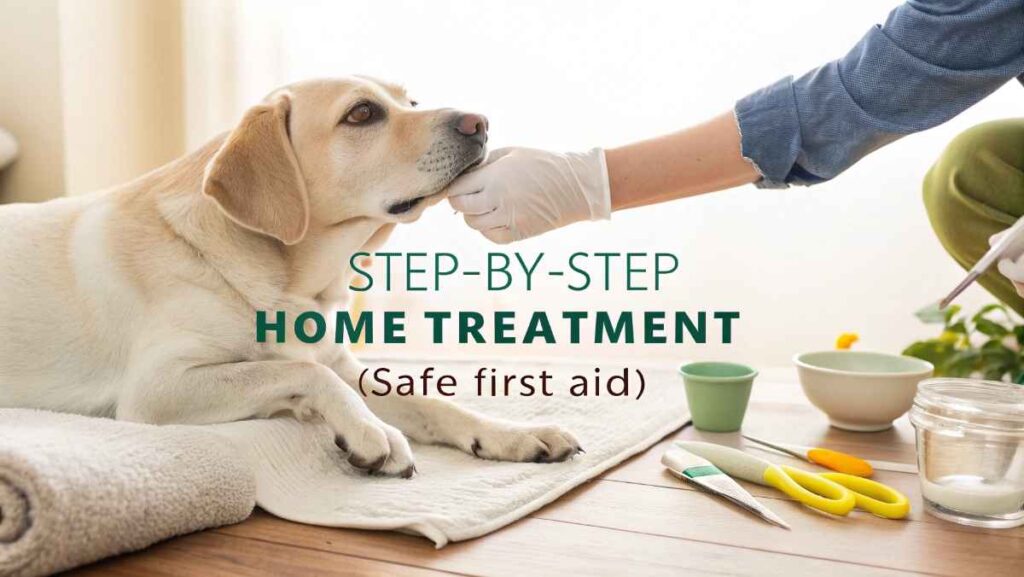
Home care is only meant as first aid. It helps reduce the number of maggots and lowers the risk until proper treatment is given.
Step 1 – Trim the Fur Around the Wound
Carefully trim or shave the hair around the affected area. This helps you clearly see the wound and all the maggots. It also keeps the area cleaner and prevents more eggs from sticking to the fur.
Use scissors or clippers gently and avoid cutting the skin.
Step 2 – Flush the Area with Warm Water
Rinse the wound using clean, lukewarm water. This helps remove dirt and may loosen some maggots.
The water can wash away surface larvae and make it easier to remove the remaining ones. Avoid using hot water, as it can hurt your dog and damage the skin.
Step 3 – Remove Maggots Manually
This is the most important part of home care.
Use clean tweezers to remove each maggot one by one. Pull them out slowly and carefully. Do not crush them inside the wound, as this can increase infection risk.
Take your time and try to remove as many as possible. Even a few remaining maggots can continue to cause damage.
Step 4 – Clean the Wound with Antiseptic
After removing the maggots, clean the wound with a pet-safe antiseptic solution such as diluted iodine or chlorhexidine.
This helps kill bacteria, reduce infection risk, and support healing. Apply gently and do not use strong chemicals.
Home Remedies That May Help (But Are Not Enough)
Some simple methods may help bring maggots to the surface, but they should not be seen as a full treatment.
Petroleum Jelly or Liquid Paraffin
Applying a thin layer over the wound can block oxygen. This may force maggots to come to the surface, making them easier to remove.
However, this method does not kill all maggots, especially those deeper in the wound. It should only be used to assist removal.
Salt Water Rinse
A mild saltwater solution can help clean the wound and reduce bacteria. It may also irritate maggots slightly.
Still, it does not reach deeper larvae and cannot fully solve the problem.
These methods can help in small ways, but they cannot replace proper care. Always treat them as temporary support.
Dangerous Home Remedies to Avoid
Many people try strong or harmful substances, thinking they will kill maggots faster. These methods are dangerous and should never be used.
Hydrogen peroxide can damage healthy tissue and slow down healing. Bleach and other strong chemicals are toxic and can burn the skin. Turpentine is painful and can poison your dog. Motor oil or petrol is extremely harmful and can lead to serious illness.
Using these substances can cause more damage than the maggots themselves. It is always better to use gentle, safe cleaning methods.
What Actually Kills Maggots Fast
The fastest and safest way to kill maggots is proper medical treatment.
Veterinarians use specific medications and procedures to remove maggots completely and treat the wound. One commonly used medicine is Nitenpyram, which can help kill larvae quickly.
In addition to medication, vets may clean the wound deeply, remove hidden maggots, and give antibiotics to prevent infection. Pain relief may also be provided if needed.
These treatments are much more effective than home remedies because they target both visible and hidden maggots.
Why Home Remedies Alone Are Not Enough
Maggots are not always visible on the surface. They can burrow deep into the skin and hide inside the wound.
They feed on tissue and release harmful bacteria. This can lead to serious infection and tissue damage. In severe cases, the infection can spread into the bloodstream and become life-threatening.
Home remedies only deal with surface-level issues. They cannot reach deep larvae or treat infections properly.
This is why relying only on home care can be risky.
What Causes Maggots on Dogs?

Maggots appear when flies lay eggs on a dog. Certain conditions make this more likely.
Open wounds are the most common cause. Dirty or wet fur also attracts flies. Dogs with poor hygiene or those that are unable to clean themselves are at higher risk.
Areas around the tail can become dirty with feces, which attracts flies. Skin infections or untreated injuries can also lead to infestation.
Flies are attracted to smell, moisture, and damaged skin. Once they lay eggs, maggots can hatch within a short time.
When to See a Vet Immediately
Some situations are too serious for home care.
Take your dog to a vet if:
- The wound is deep
- There are many maggots
- The area smells very bad
- Your dog is in pain
- Your dog is weak or not eating
- You cannot remove all maggots
Delaying treatment can make things worse very quickly.
How to Prevent Maggots on Dogs
Prevention is always easier than treatment.
Keep Your Dog Clean
- Bathe your dog regularly
- Dry the fur properly
- Keep living areas clean
Check for Wounds Daily
- Look for cuts or scratches
- Clean wounds immediately
- Apply pet-safe antiseptic
Control Flies
- Keep your home clean
- Dispose of waste properly
- Use safe fly repellents
Groom Your Dog
- Trim long fur
- Keep the area around the tail clean
- Brush regularly
Take Care of Sick Dogs
Dogs that are weak or injured are more at risk. Give them extra care and attention.
Dos and Don’ts
| Do | Don’t |
| Clean the wound gently | Use bleach or strong chemicals |
| Remove maggots carefully | Ignore the condition |
| Use pet-safe antiseptic | Use motor oil or petrol |
| Seek proper care when needed | Delay treatment |
Maggots in Dog Wound
Maggots in a dog wound happen when flies lay eggs on open skin. These hatch into larvae that feed on tissue, causing pain, infection, bad smell, and serious damage if not treated quickly.
Symptoms of Maggots in Dogs
Common signs include visible white worms, foul smell, swelling, redness, and oozing wounds. Dogs may lick, bite, or act restless due to pain. Loss of appetite and weakness can appear in severe cases.
What Home Remedy Kills Maggots on Dogs Skin
Home remedies like warm water rinsing, antiseptic cleaning, and petroleum jelly can help remove maggots from skin. However, they don’t fully kill all larvae, so proper treatment for Myiasis is still needed.
How Fast Can Maggots Kill a Dog at Home
Maggots can become dangerous within a few days if untreated. They spread quickly, damage tissue, and cause infection. In severe cases, they may lead to life-threatening conditions if proper care is delayed.
Can Dettol Kill Maggots in Dogs
Dettol may kill maggots, but it is not safe for dogs. It can irritate skin, cause burns, and worsen wounds. Using it directly on your dog can do more harm than good.
How Fast Can Dettol Kill Maggots in Dogs

Dettol can kill maggots quickly, but it also harms healthy skin. It may cause pain, irritation, and chemical burns. Because of this, it is not recommended for treating maggots on dogs.
What Home Remedy Kills Maggots on Dogs Ears
For ears, gently rinse with clean water and carefully remove visible maggots. Use pet-safe antiseptic only. Avoid strong substances, as ears are sensitive. Always seek proper treatment to prevent deeper infection.
What Kills Maggots on a Dog
The most effective way to kill maggots is proper treatment, including cleaning, removal, and medicines like Nitenpyram. These methods work faster and safely compared to risky home remedies.
FAQs
Does Dawn dish soap kill maggots?
Dawn dish soap may kill some surface maggots, but it is not reliable. It can also irritate skin, so it’s not recommended for treating dogs.
What medication kills maggots in dogs?
Medicines like Nitenpyram can kill maggots quickly. Vets may also give antibiotics and proper wound care to fully treat the infection safely.
Will hydrogen peroxide kill a maggot?
Hydrogen peroxide can kill maggots, but it also damages healthy tissue. It slows healing and causes irritation, so it is not safe for treating dogs.
Will straight vinegar kill maggots?
Vinegar may irritate or kill some maggots, but it can also harm sensitive skin. It is not a safe or complete treatment for dogs.
What smells do maggots hate?
Maggots dislike strong smells like vinegar, camphor, and some oils. However, these are not safe treatments, so avoid using them directly on your dog.
How to Kill Maggots on Dogs?
Clean the wound, rinse with warm water, remove maggots using tweezers, and apply antiseptic. Proper treatment is needed to fully stop the problem and infection.
What to Do About Maggots Found in Your Dog’s Poop?
Maggots in poop often come from flies. Clean the area, dispose of waste quickly, and check your dog for wounds to prevent further infestation.
How do I get rid of maggots on my dog at home?
You can rinse, remove visible maggots, and clean the wound with antiseptic. However, home care alone is not enough for serious infestations like Myiasis.
Any home remedies for treating maggots in a dog’s ear?
Gently rinse with clean water and carefully remove visible maggots. Avoid harsh chemicals, as ears are sensitive. Proper treatment is needed for complete safety.
What home remedy can I use to kill maggots on my dog safely?
Safe options include warm water cleaning, antiseptic, and petroleum jelly to help removal. These methods support care but cannot fully kill all maggots.
Final Thoughts
Finding maggots on your dog can be upsetting, but quick action can help protect your pet. Cleaning the wound, removing visible maggots, and using safe methods can reduce the problem in the early stage.
However, home remedies alone are not enough to fully treat the condition. Because Myiasis can become serious very quickly, proper care is always the safest choice.
Your dog depends on you for care and protection. Acting early, avoiding harmful methods, and choosing the right treatment can make a big difference in your dog’s recovery.
Read More: