What Do Ring Worms Look Like On Dogs: Easy Prevention Tips

Ringworm on dogs usually appears as round or irregular patches of hair loss with gray, scaly, or crusty skin. The affected areas may have dandruff-like flakes, red ring-shaped edges, or darkened skin, though appearance can vary depending on the stage of the infection.
In this article, you’ll learn how to identify ringworm on dogs, recognize early symptoms, compare similar skin conditions, and know when to seek veterinary care.
Key Takeaways
- Ringworm is a fungal infection, not a parasite or worm.
- It often appears as round bald patches with red, flaky, or crusty skin.
- Hair loss usually starts in small areas and gradually spreads.
- Puppies, older dogs, and dogs with weak immune systems are more likely to develop ringworm.
- Ringworm can spread to other pets and people, so early treatment is important.
- A veterinarian can confirm the infection using special diagnostic tests.
What Does Ringworm Look Like on Dogs?
The most common answer to what does ringworm look like on dogs is a round area of hair loss with dry, irritated skin. These spots may look different depending on the stage of the infection and your dog’s overall health.
In the beginning, you may notice a small patch where the fur appears thinner than normal. As the infection grows, the affected area often becomes circular with a raised edge and a clearer center. The skin may look pink, red, or gray and can develop crusty patches, flaky skin, or mild scaling.
Unlike many other skin conditions, ringworm in dogs does not always cause severe itching. Some dogs barely notice it, while others scratch or lick the area because of skin irritation.
The fungi responsible for this condition, most commonly Microsporum canis, infect the hair follicles and the outer layer of the skin. As the fungus spreads, the hairs become weak and break easily, leaving noticeable broken hairs and circular areas of missing fur.
Some dogs develop only one small lesion, while others may have several dog skin lesions across different parts of the body. If left untreated, these spots can slowly become larger over time.
What Are the Early Signs of Ringworm in Dogs?
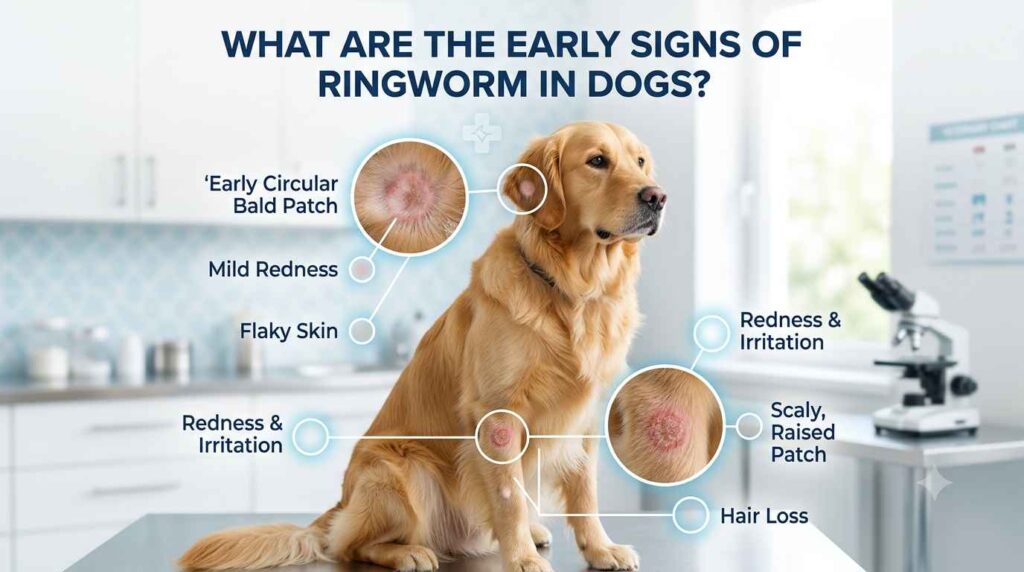
Recognizing the early signs of ringworm in dogs can help you begin treatment before the infection spreads to other pets or family members.
At first, the symptoms are often mild and easy to miss. Many owners mistake them for a minor scrape or insect bite.
Common early signs include:
- Small areas of thinning fur
- Tiny circular spots without much hair
- Dry or rough skin
- Mild redness
- Light skin inflammation
- Slight skin irritation
- A few broken hairs
- Mild dandruff-like flakes
These early spots usually grow slowly over several days or weeks. As the fungus continues to spread, the patches become more noticeable and may develop into the classic ring-shaped lesions.
Some dogs also develop dog hair loss patches without obvious redness. Others may only have dry, flaky skin that looks harmless at first. Because symptoms vary from dog to dog, it is always safest to have unusual skin changes checked by a veterinarian.
Where Does Ringworm Usually Appear on Dogs?
Ringworm can affect almost any part of the body, but some areas are more commonly infected than others.
The infection often appears on:
- Face
- Around the eyes
- Ears
- Nose
- Front legs
- Paws
- Tail
- Belly
These areas are more likely to come into contact with contaminated surfaces or infected animals. Small scratches in the skin also make it easier for fungal organisms to enter.
Ringworm on puppies is especially common around the face and ears because young dogs have developing immune systems and spend more time exploring their surroundings.
As the infection progresses, multiple circular spots may appear on different parts of the body. Some dogs have only one lesion, while others develop widespread areas of red circular lesions and bald patches.
In severe cases, the nails can also become brittle or misshapen, although this is less common than skin involvement.
How Can You Tell If Your Dog Has Ringworm?
Although ringworm has a fairly recognizable appearance, it can still be confused with several other skin problems.
You may suspect dog ringworm symptoms if your dog has:
- Circular areas of missing hair
- Dry, flaky skin
- Crusty or scaly patches
- Broken hairs around the edges
- Mild redness
- Slowly expanding lesions
- Mild itching or licking
However, appearance alone cannot confirm the diagnosis. Many other forms of dog skin fungus, allergies, bacterial infections, or parasites produce similar symptoms.
Veterinarians use several diagnostic methods to identify fungal skin infection dogs accurately. Depending on the situation, they may perform a Wood’s lamp examination, collect hair samples for a fungal culture, or recommend PCR testing for faster identification of the fungus.
These tests help determine whether the infection is truly dermatophytosis or another skin condition requiring different treatment.
Ringworm vs. Other Dog Skin Problems
One reason ringworm is difficult to recognize is that several common skin diseases look very similar.
| Condition | Appearance | Itching | Main Cause |
| Ringworm | Circular hair loss with flaky or crusty skin | Mild to moderate | Fungal infection |
| Mange | Patchy hair loss with intense itching | Severe | Mites |
| Hot Spots | Moist, red, painful sores | Severe | Bacteria and self-trauma |
| Allergies | Widespread redness and scratching | Moderate to severe | Allergic reaction |
| Yeast Infection | Greasy skin with odor | Moderate | Yeast overgrowth |
| Bacterial Skin Infection | Red bumps, pus, crusts | Moderate | Bacteria |
A ringworm rash on dogs usually has a more defined circular shape than most other skin conditions. However, not every circular bald spot is caused by ringworm.
For example, allergies often affect larger areas of the body, while hot spots tend to appear suddenly and become wet or painful. Mange usually causes intense itching, whereas many dogs with dog fungal infection experience only mild discomfort.
Because these conditions require different treatments, getting an accurate diagnosis is important before using any medication.
Some dogs may even have a secondary skin infection along with ringworm, making the symptoms more severe. In rare situations, a veterinarian may recommend additional testing, such as a skin biopsy, if the diagnosis remains unclear or the lesions do not respond as expected.
By identifying the condition early and starting the appropriate care, most dogs recover well and return to having healthy skin and a normal coat.
Does Ringworm Itch or Hurt Dogs?
Many dog owners expect ringworm to be very itchy, but that is not always the case. Some dogs seem completely comfortable, while others scratch or lick the affected areas from time to time. The amount of discomfort depends on the severity of the infection and your dog’s overall health.
In mild cases, your dog may only have a few bald patches with little or no itching. As the infection spreads, the skin may become more irritated and develop skin inflammation, making your dog scratch more often. If bacteria enter the damaged skin, a secondary skin infection can develop, leading to increased redness, swelling, pain, and discomfort.
If your dog is constantly scratching, licking, or chewing the affected areas, it’s a good idea to have them examined by a veterinarian. Early treatment can prevent the infection from becoming more serious.
What Causes Ringworm in Dogs?
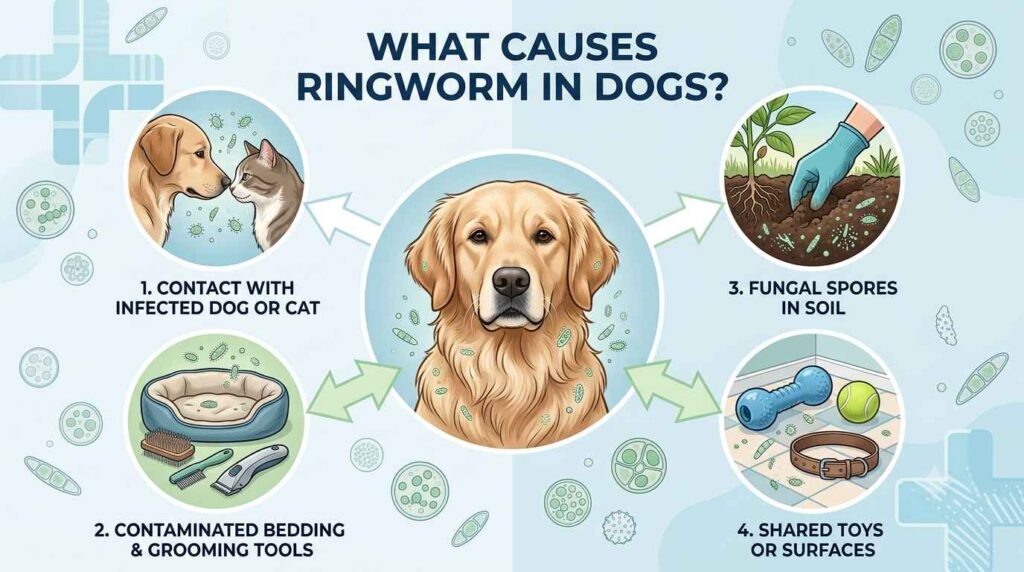
Ringworm is caused by a group of fungi known as dermatophytes, which feed on keratin found in the skin, hair, and nails. The medical name for this condition is dermatophytosis.
The most common fungus responsible is Microsporum canis, although other fungal species can also cause the infection.
Dogs can become infected through direct contact with:
- An infected dog or cat
- Contaminated bedding
- Grooming brushes
- Blankets
- Kennels
- Furniture
- Soil containing fungal spores
These fungal spores are very hardy and can survive in the environment for months. This is why cleaning your dog’s surroundings is just as important as treating the infection itself.
Dogs with a weakened immune system are generally more likely to develop ringworm after being exposed to the fungus.
Which Dogs Are Most at Risk?
Although any dog can develop ringworm, some are more likely to become infected than others.
Dogs at higher risk include:
- Young puppies
- Senior dogs
- Dogs with weakened immune systems
- Dogs living in shelters
- Dogs from breeding facilities
- Long-haired breeds
- Dogs living with multiple pets
Ringworm on puppies is especially common because their immune systems are still developing. They also spend more time playing closely with littermates, making it easier for the infection to spread.
Dogs recovering from illness or taking medications that weaken the immune system may also have a higher chance of developing fungal skin infections.
Is Ringworm Contagious?
Yes. Ringworm is considered a contagious infection that spreads easily between animals and people.
An infected dog can pass the fungus through direct contact or by leaving fungal spores on objects such as:
- Dog beds
- Blankets
- Brushes
- Toys
- Furniture
- Carpets
Ringworm is also a zoonotic disease, meaning it can spread from animals to humans. Children, older adults, and people with weakened immune systems may be more likely to become infected.
If your dog has ringworm, wash your hands after handling them, clean shared surfaces regularly, and limit contact with other pets until your veterinarian says the infection has cleared.
How Veterinarians Diagnose Ringworm
Although ringworm often has a recognizable appearance, veterinarians do not rely on looks alone.
They may use one or more of the following tests:
Wood’s Lamp Examination
A Wood’s lamp examination uses ultraviolet light to check certain fungal infections. Some strains of Microsporum canis produce a greenish glow under the lamp, although not every case will fluoresce.
Fungal Culture
A fungal culture is considered one of the most reliable tests. Hair and skin samples are collected and placed in a special growth medium to identify the fungus. Results usually take several days.
PCR Testing
Some veterinary clinics also offer PCR testing, which detects fungal DNA more quickly than traditional cultures and can help confirm the diagnosis sooner.
These tests help your veterinarian rule out other causes of hair loss and choose the most effective treatment plan.
How Is Ringworm Treated?
Most dogs recover well with proper treatment, but patience is important because fungal infections take time to clear.
Treatment often includes a combination of:
- Topical antifungal creams
- Medicated shampoos
- Antifungal rinses
- Oral antifungal medications for more widespread infections
Your veterinarian will recommend the best option based on the severity of the infection.
Never stop treatment early just because the skin looks better. Ringworm can still be present even after the lesions begin to heal.
Cleaning your dog’s environment is also essential. Wash bedding, disinfect grooming tools, vacuum frequently, and remove loose hair to reduce the number of fungal spores in your home.
Good pet hygiene plays a major role in preventing reinfection.
How Long Does Ringworm Take to Heal?
Recovery time depends on several factors, including your dog’s health, the number of affected areas, and how quickly treatment begins.
Many mild cases improve within a few weeks, while more severe infections may take several weeks or even a few months to resolve completely.
You may notice that the redness fades first, followed by new hair growth. Even if your dog’s coat begins to look normal, continue treatment exactly as directed by your veterinarian until the infection has fully cleared.
Stopping medication too early may allow the fungus to return.
How to Prevent Ringworm in Dogs
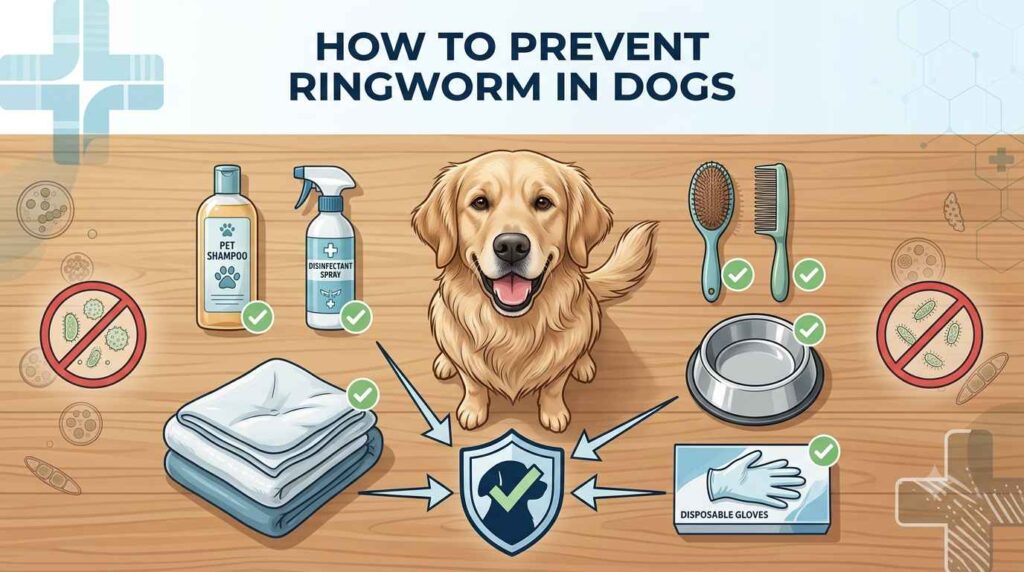
Although ringworm cannot always be prevented, a few simple habits can greatly reduce your dog’s risk.
Helpful prevention tips include:
- Keep your dog’s bedding clean.
- Wash grooming tools regularly.
- Vacuum carpets and furniture often.
- Avoid sharing brushes between pets.
- Check your dog’s skin during routine grooming.
- Isolate infected animals until treatment is complete.
- Practice good pet hygiene after handling infected pets.
- Schedule regular veterinary checkups.
Keeping your dog healthy and supporting a strong immune system can also help reduce the risk of fungal infections.
When Should You See a Veterinarian?
Contact your veterinarian if you notice:
- Multiple round areas of hair loss
- Rapidly spreading lesions
- Crusty or bleeding skin
- Signs of pain or severe itching
- Lesions around the eyes
- Nail changes
- Hair loss that does not improve
- Other pets developing similar symptoms
Early diagnosis allows treatment to begin sooner and helps prevent the infection from spreading throughout your home.
Frequently Asked Questions
How do dogs get ringworm?
Dogs get ringworm by touching infected animals, contaminated bedding, grooming tools, furniture, or soil. The fungus spreads easily through direct contact and fungal spores.
How to treat ringworm in dogs at home
Keep the infected area clean, wash bedding, disinfect surfaces, and follow your veterinarian’s treatment plan. Avoid home remedies unless your veterinarian recommends them.
How contagious is ringworm from dog to human?
Ringworm spreads easily from dogs to people through direct contact or contaminated items. Good hygiene and early treatment help lower the risk of infection.
Can ringworm go away without treatment?
Some mild cases may improve over time, but untreated ringworm can spread to other pets and people. Veterinary treatment is the safest and quickest option.
Can humans catch ringworm from dogs?
Yes, humans can catch ringworm from infected dogs through direct contact or contaminated objects. Washing hands and treating infected pets helps prevent spread.
Does ringworm always itch?
No, ringworm does not always itch. Some dogs show little discomfort, while others may scratch or lick the affected areas because of mild skin irritation.
Can indoor dogs get ringworm?
Yes, indoor dogs can get ringworm from infected pets, contaminated grooming tools, bedding, or fungal spores carried inside on people or objects.
Is every circular bald spot ringworm?
No, circular bald spots can also be caused by allergies, mange, bacterial infections, or other skin conditions. A veterinarian can confirm the real cause.
Can puppies recover from ringworm?
Yes, puppies usually recover completely with proper treatment, good hygiene, and regular veterinary care. Most grow back healthy fur once the infection clears.
Final Verdict
Knowing what does ringworm look like on dogs can help you spot the problem early, but appearance alone cannot confirm the diagnosis. Ringworm usually causes round areas of hair loss, flaky skin, crusty patches, and mild redness, although symptoms can vary from one dog to another.
Because this fungal infection spreads easily between pets and people, early veterinary care is important. With the right dog ringworm treatment, proper cleaning, and patience, most dogs recover fully and regain healthy skin and a thick, shiny coat. If you notice unusual skin changes or persistent hair loss, schedule a veterinary visit to get the correct diagnosis and treatment plan.