Can Dogs Have Balsamic Vinegar? | Vet Safety Guide & FAQs

Dogs should not have balsamic vinegar as a regular food. A tiny accidental amount may not cause problems, but its acidity can upset the stomach. Balsamic dressings may also contain onion, garlic, salt, or other ingredients that are unsafe for dogs.
In this article, we’ll explain whether dogs can have balsamic vinegar, possible risks, safe alternatives, and what to do if your dog accidentally eats it.
Is Balsamic Vinegar Safe for Dogs?
Balsamic vinegar is not considered a suitable food for dogs because it provides no meaningful nutritional benefit and can irritate the digestive system.
Possible problems after consuming too much may include:
- Stomach discomfort
- Nausea
- Drooling
- Vomiting
- Diarrhea
- Reduced appetite
- Mouth irritation
The amount matters. A dog that licks a small drop from a plate is in a very different situation from a dog that drinks vinegar directly from a bottle.
Concentrated vinegar can be more irritating than a small amount mixed into food. ASPCA guidance notes that vinegar is acidic and can cause stomach upset and irritation when ingested.
For this reason, there is no good reason to add balsamic vinegar to your dog’s meals.
Is Balsamic Vinegar Bad for Dogs?
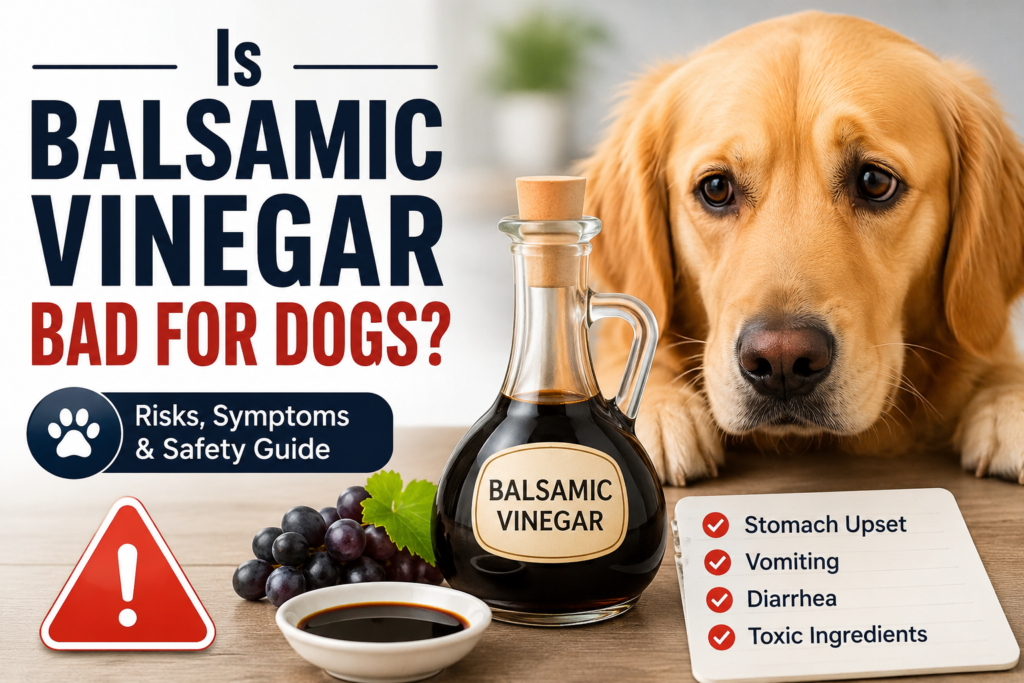
Yes, balsamic vinegar is best avoided for dogs. It is acidic and may upset your dog’s stomach, especially if consumed in a larger amount.
A tiny accidental lick of plain balsamic vinegar is unlikely to cause serious harm, but it should not be given as a regular treat. Balsamic dressings and glazes can be more concerning because they may contain garlic, onion, excess salt, or other ingredients that are unsafe for dogs.
Can Dogs Eat Balsamic Vinegar Dressing?
Balsamic dressing is generally best avoided for dogs. Unlike plain vinegar, a dressing can contain several additional ingredients that may be unhealthy or toxic to dogs.
Depending on the recipe, balsamic dressing may contain:
- Onion
- Garlic
- Salt
- Sugar
- Oils
- Spices
- Artificial sweeteners
- Other seasonings
Onion and garlic are particularly important concerns. Dogs can develop toxicity after eating raw, cooked, dehydrated, or powdered forms of these ingredients. They can damage red blood cells and potentially cause anemia.
That means you should never assume that a salad dressing is safe just because it contains balsamic vinegar. Always check the ingredient list before allowing your dog to eat human foods containing sauces or dressings.
Why Are Onion and Garlic Dangerous?
Onions and garlic belong to the Allium family. They contain compounds that can damage a dog’s red blood cells.
Signs of Allium toxicity may not appear immediately. According to the Merck Veterinary Manual, clinical signs can take several days to develop and may include weakness, pale gums, rapid breathing, lethargy, jaundice, and collapse.
Garlic is also more toxic than onion, particularly in concentrated forms such as garlic powder.
So if your dog ate balsamic dressing containing onion or garlic, don’t focus only on the vinegar. The added ingredients may be the more important concern.
Can Dogs Have Balsamic Glaze?
Dogs should also avoid balsamic glaze. Balsamic glaze is different from ordinary balsamic vinegar because it is usually thicker and may contain added sweeteners or other ingredients. Recipes and commercial products vary, so the ingredient label matters.
A tiny accidental taste is unlikely to cause the same concern as consuming a large quantity, but balsamic glaze should not become part of a dog’s regular diet.
If your dog ate a balsamic glaze product, check whether it contains:
- Onion or garlic
- Xylitol
- Large amounts of added sugar
- Excessive salt
- Other potentially harmful ingredients
Xylitol deserves particular attention. In dogs, xylitol can cause a rapid and potentially severe drop in blood sugar and may also cause liver injury.
If a product contains xylitol, contact a veterinarian promptly rather than waiting for symptoms.
What Happens If a Dog Eats Balsamic Vinegar?
What happens depends mainly on how much your dog consumed and what else was in the product.
After a small accidental amount of plain balsamic vinegar, your dog may show no symptoms at all. Some dogs may experience mild digestive irritation.
Possible signs include:
- Drooling
- Vomiting
- Loose stool or diarrhea
- Decreased appetite
- Stomach discomfort
- Lip licking
- General digestive upset
Concentrated vinegar can irritate the mouth and digestive tract. ASPCA notes that undiluted vinegar can cause vomiting, diarrhea, oral irritation, and pain when pets ingest it.
If symptoms are severe, persistent, or accompanied by weakness, collapse, or other unusual behavior, veterinary advice is appropriate.
How Much Balsamic Vinegar Is Too Much for Dogs?
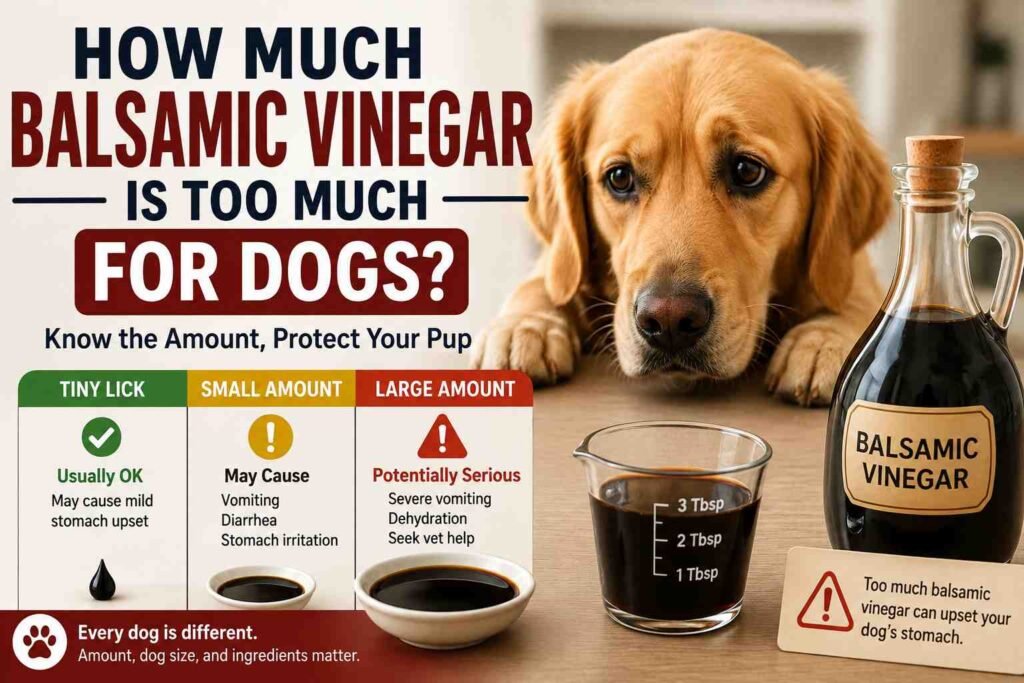
There is no universal safe serving size of balsamic vinegar for dogs. A dog’s size, age, health, the concentration of the product, and the amount consumed can all influence the situation. The ingredients mixed with the vinegar are also important.
For example, licking a tiny amount of plain vinegar from a plate is very different from drinking a substantial amount of concentrated vinegar or eating a salad covered in garlic-containing dressing.
Rather than trying to calculate a home “safe dose,” it is better to prevent your dog from consuming balsamic vinegar intentionally.
If your dog has consumed a significant amount, contact your veterinarian and provide the product’s name, ingredients, approximate amount eaten, and your dog’s weight.
What Should You Do If Your Dog Licks Balsamic Vinegar?
If your dog only licked a small amount of plain balsamic vinegar, don’t panic.
Follow these steps:
- Remove the vinegar or food so your dog cannot consume more.
- Check the ingredients if it was a dressing, glaze, or sauce.
- Estimate how much was eaten as accurately as possible.
- Offer access to fresh water.
- Watch your dog for digestive symptoms.
- Contact your veterinarian if your dog consumed a large amount or develops concerning symptoms.
Do not attempt to make your dog vomit unless a veterinarian specifically instructs you to do so. This is especially important when a product contains a potentially dangerous ingredient because vomiting is not appropriate in every poisoning situation.
If xylitol may have been consumed, treat the situation more urgently. Xylitol poisoning can cause hypoglycemia, weakness, vomiting, seizures, and potentially liver injury in dogs.
When Should You Call a Veterinarian?
Contact your veterinarian if your dog ate a large amount of balsamic vinegar, consumed an unknown amount, or is showing significant symptoms.
Seek prompt veterinary advice if you notice:
- Repeated vomiting
- Severe or persistent diarrhea
- Extreme weakness
- Tremors
- Difficulty walking
- Seizures
- Collapse
- Severe abdominal discomfort
- Pale gums
- Yellowing of the eyes or skin
You should also contact a veterinarian if the balsamic product contained onion, garlic, or xylitol.
Onion and garlic toxicity can cause red blood cell damage, and signs may take several days to become obvious. Xylitol can act much faster, with hypoglycemia potentially developing within a short period after ingestion.
When contacting your veterinarian, keep the bottle or food package available. The exact ingredient list can help determine what your dog was exposed to.
Can Dogs Have Different Types of Balsamic Products?
Not all balsamic products carry exactly the same risks.
| Product | Recommended for Dogs? | Main Concern |
| Plain balsamic vinegar | No | Acidity and stomach irritation |
| Balsamic dressing | No | Onion, garlic, salt, fat, seasonings |
| Balsamic glaze | No | Added sugar and other ingredients |
| Balsamic reduction | No | Concentrated ingredients |
| Garlic balsamic dressing | No | Garlic toxicity |
| Onion balsamic dressing | No | Onion toxicity |
The important lesson is that the label matters. A product that looks like simple balsamic vinegar may actually be a sauce or dressing containing several additional ingredients.
Can Dogs Have Other Types of Vinegar?
Can Dogs Have Balsamic Vinaigrette?
Dogs should not be given balsamic vinaigrette regularly. It may contain vinegar, oil, salt, garlic, onion, or other seasonings. A small accidental taste may not cause serious problems, but check the ingredients and watch your dog for stomach upset.
Can Dogs Have Balsamic Chicken?
Dogs can eat plain, fully cooked chicken, but balsamic chicken is best avoided. Balsamic sauce may contain vinegar, garlic, onion, salt, sugar, or seasonings that can upset dogs or cause toxicity. Give your dog plain chicken without sauces or spices instead.
Can Dogs Have Vinegar?
Dogs can have tiny accidental amounts of plain vinegar, but it is not necessary or recommended as a regular food. Vinegar is acidic and may irritate your dog’s mouth or stomach, especially when consumed in larger amounts or undiluted.
Can Dogs Eat Food With Vinegar?
Dogs should avoid foods containing large amounts of vinegar, especially heavily seasoned sauces, dressings, and prepared foods. A small amount of vinegar in food may not cause problems, but ingredients like onion, garlic, salt, and spices can be more concerning.
Can Dogs Have Red Wine Vinegar?
Red wine vinegar is not a good choice for dogs. A tiny accidental amount is unlikely to cause serious harm, but its acidity may upset the stomach. Avoid intentionally feeding it, especially in dressings containing onion, garlic, salt, or seasonings.
Can Dogs Have Rice Vinegar?
Dogs should not be given rice vinegar as a regular treat. A tiny amount in food is unlikely to cause serious problems, but vinegar can irritate the stomach. Flavored rice vinegar may also contain sugar, salt, or other ingredients unsuitable for dogs.
Can Dogs Have Malt Vinegar?
Malt vinegar is best kept away from dogs. A small accidental taste of plain malt vinegar is unlikely to be dangerous, but its acidity can cause stomach irritation. Foods containing malt vinegar may also have excess salt, fat, or harmful seasonings.
Are There Safer Alternatives to Balsamic Vinegar?
If you want to give your dog something tasty from your kitchen, choose simple, unseasoned foods instead.
Some options can include:
- Plain cooked chicken
- Plain cooked turkey
- Carrots
- Cucumber
- Green beans
- Dog-safe commercial treats
Avoid adding sauces, dressings, garlic, onions, excessive salt, or spicy seasonings.
Remember that even a dog-safe food should be offered in moderation. Treats and extras should not replace a complete and balanced diet.
FAQ’sAbout Balsamic Vinegar For Dogs
Can dogs eat a small amount of balsamic vinegar?
A tiny accidental amount of plain balsamic vinegar is unlikely to cause serious poisoning in most dogs, but it can cause stomach irritation. It is still best not to intentionally give balsamic vinegar to your dog.
Can dogs have balsamic vinegar on salad?
It is best to avoid giving dogs salad covered with balsamic dressing. The dressing may contain onion, garlic, excessive salt, or other ingredients that are unsafe for dogs.
Can dogs eat balsamic glaze?
Dogs should not be given balsamic glaze intentionally. Commercial glazes may contain added sugar and other ingredients. Always check the label, particularly for onion, garlic, or xylitol.
Is balsamic vinegar toxic to dogs?
Plain balsamic vinegar is not best described as a highly toxic food for dogs. The primary concern is its acidity and potential for digestive irritation. However, added ingredients in balsamic products can create more serious risks.
Can balsamic vinegar cause diarrhea in dogs?
Yes. Vinegar can irritate the digestive system, particularly when consumed in concentrated amounts. A dog that develops persistent or severe diarrhea after eating a balsamic product should be evaluated by a veterinarian.
What if my dog drank balsamic vinegar?
Remove access to the product, determine approximately how much was consumed, and check its ingredients. Contact your veterinarian if a large amount was consumed, the product contains potentially toxic ingredients, or your dog develops symptoms.
Can dogs have balsamic vinegar with garlic?
No. Garlic is toxic to dogs and can damage red blood cells. Concentrated garlic products such as garlic powder can be particularly concerning.
Can puppies have balsamic vinegar?
Puppies should not be given balsamic vinegar. Their diet should focus on an appropriate complete and balanced puppy food rather than acidic human condiments or sauces.
Conclusion
So, can dogs have balsamic vinegar? It is best to avoid giving balsamic vinegar to dogs intentionally. A tiny accidental lick of plain balsamic vinegar is unlikely to be a serious poisoning event, but the acidity may cause digestive irritation.
Balsamic dressings and glazes require more caution because they can contain ingredients such as onion, garlic, salt, or xylitol. Onion and garlic can damage a dog’s red blood cells, while xylitol can cause dangerous low blood sugar and potentially liver injury.
If your dog accidentally consumes balsamic vinegar, check the ingredients, consider the amount eaten, and monitor your pet. When the amount is large, the ingredients are concerning, or symptoms appear, contact your veterinarian for advice.