Collapsing Trachea in Dogs: Early Signs, Causes & Solutions

Collapsing trachea in dogs is a progressive condition where weakened airway rings cause coughing and breathing issues. Severe cases need urgent vet care for safety.
In this guide, you’ll learn the signs, causes, and simple ways to manage this condition so your furry friend stays comfortable, safe, and full of life every day.
What Is Tracheal Collapse in Dogs?
Tracheal collapse is a progressive condition affecting a dog’s windpipe (trachea). The trachea is a flexible tube made of C-shaped cartilage rings that carry air from the nose and mouth into the lungs.
In healthy dogs, these rings stay firm and open. But in dogs with this condition, the cartilage weakens, and the trachea flattens. This makes it harder for air to pass through, especially during breathing or excitement.
Think of it like a soft straw that bends when pressure is applied. When the trachea collapses, airflow becomes restricted, leading to coughing and breathing difficulty.
Despite sounding scary, many dogs with mild to moderate tracheal collapse continue to live comfortable lives with proper management. Early awareness makes a powerful difference.
Symptoms of Tracheal Collapse in Dogs

Recognizing symptoms early can help you take fast, confident action. The most common and noticeable sign is a dry, honking cough that sounds like a goose.
Common symptoms include:
- Persistent, dry coughing
- Honking cough sound
- Difficulty breathing
- Rapid breathing or panting
- Exercise intolerance
- Gagging or retching
- Blue-tinged gums (serious sign)
- Fainting in severe cases
When symptoms get worse:
- During excitement or stress
- After exercise
- In hot or humid weather
- When pressure is applied to the neck (like a collar)
Dogs often appear normal between coughing episodes, especially in early stages. But if symptoms worsen or breathing becomes difficult, immediate veterinary care is essential.
Also Read: Can I Give My Dog Robitussin For A Cough: Vet-Backed Advice
Get Quick Answers With Our Vet-Created Symptom Checker
If your dog is coughing or showing unusual breathing patterns, a symptom checker can help you quickly understand what’s happening.
By entering simple details like:
- Type of cough
- Frequency
- Energy levels
- Breathing changes
You can get instant guidance on whether your dog needs urgent care or routine monitoring.
While these tools are helpful, they are not a replacement for a licensed veterinarian. Always consult a professional if symptoms persist or worsen.
Stages of Tracheal Collapse in Dogs
Tracheal collapse is divided into four stages based on severity. Understanding these stages helps you plan better care.
Grade 1 (Mild)
- Trachea slightly narrowed (about 25%)
- Mild or occasional cough
- Dog behaves normally
Grade 2 (Moderate)
- Narrowing increases to about 50%
- More frequent coughing
- Mild breathing difficulty
Grade 3 (Severe)
- Narrowing reaches around 75%
- Frequent coughing and breathing issues
- Reduced activity levels
Grade 4 (Very Severe)
- Trachea almost fully collapsed
- Severe breathing distress
- Possible fainting or blue gums
At this stage, immediate veterinary care is critical. Early diagnosis can help prevent progression and improve outcomes.
Causes of Tracheal Collapse in Dogs
There is no single cause, but several factors increase the risk.
Common causes and risk factors:
1. Genetic weakness: Many dogs are born with weaker cartilage, especially small breeds.
2. Breed predisposition: Small dogs are more likely to develop this condition, including:
- Yorkshire Terriers
- Pomeranians
- Chihuahuas
- Shih Tzus
- Toy Poodles
3. Age factor: Most cases appear in middle-aged or older dogs.
4. Obesity: Extra weight puts pressure on the trachea, making breathing harder.
5. Environmental irritants: Smoke, dust, perfumes, and air fresheners can worsen symptoms.
6. Other health conditions
- Heart disease
- Respiratory infections
- Dental issues
Understanding these triggers allows you to reduce risks and protect your dog’s health.
Must Read: How Much Aspirin Can I Give My Dog – Vet-Approved Guide!
How Veterinarians Diagnose Collapsing Trachea in Dogs
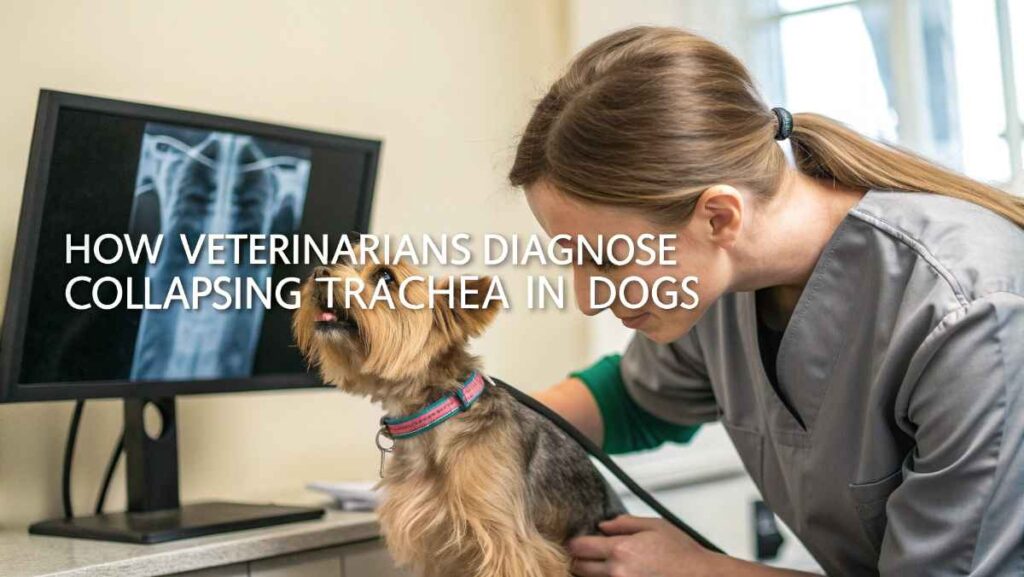
Veterinarians use a combination of observation, tests, and history to confirm diagnosis.
Step-by-step diagnosis process:
1. Medical history: Your vet will ask about coughing patterns, triggers, and lifestyle.
2. Physical examination: Gentle pressure on the throat may trigger a cough, helping confirm suspicion.
3. X-rays (radiographs): Used to view the trachea and check for narrowing.
4. Advanced imaging (if needed)
- Fluoroscopy (moving X-ray)
- Bronchoscopy (camera inside airway)
5. Additional tests
- Blood tests
- Heart evaluation (echocardiogram)
These tests help rule out other conditions and ensure an accurate diagnosis.
Treatment for a Collapsing Trachea in Dogs
Treatment focuses on reducing symptoms, improving airflow, and enhancing quality of life. There is no complete cure, but management is highly effective.
Medications
Most dogs respond well to medication.
Common options include:
- Cough suppressants: Help reduce irritation and control coughing cycles.
- Anti-inflammatory drugs: Reduce swelling in the airway, making breathing easier.
- Sedatives: Calm anxious dogs and prevent symptom flare-ups.
- Antibiotics: Used if infections are present.
With consistent use, many dogs show significant improvement and live comfortably.
Surgery
Surgery is considered in severe cases when medications are not enough.
Surgical options:
- External rings to support the trachea
- Internal stents to keep the airway open
While surgery can greatly improve breathing, it carries some risks and is usually reserved for advanced stages.
Even after surgery, ongoing care is important.
Managing Tracheal Collapse in Dogs
Daily care plays a powerful role in keeping your dog happy and symptom-free.
Simple yet effective management tips:
1. Maintain a healthy weight: Weight loss can significantly reduce pressure on the trachea.
2. Switch to a harness: Avoid collars to prevent pressure on the neck.
3. Reduce irritants: Keep your home free from smoke, dust, and strong scents.
4. Control excitement: Keep your dog calm during play and interactions.
5. Gentle exercise: Short, slow walks are ideal.
6. Comfortable sleeping position: Allow your dog to sleep with head slightly elevated.
These small changes can create a big, positive impact on your dog’s life.
How To Treat Collapsing Trachea In Dogs
Treatment includes medicines to control coughing and swelling, weight control, and lifestyle changes. In serious cases, surgery may help.
Most dogs improve with proper care, regular vet visits, and avoiding triggers like heat, stress, and neck pressure.
What Causes Collapsing Trachea In Dogs
Collapsing trachea happens when the airway cartilage becomes weak. It is common in small breeds and older dogs.
Obesity, smoke, infections, and heart problems can make it worse. Some dogs are born with weaker trachea, increasing their risk.
Medication For Collapsing Trachea In Dogs
Vets often use cough suppressants, anti-inflammatory drugs, and sometimes sedatives to calm breathing. Antibiotics may be given if infection is present.
These medicines help reduce coughing, swelling, and discomfort, allowing dogs to breathe easier and feel more relaxed.
Stages Of Tracheal Collapse In Dogs
There are four stages, from mild to severe. Early stages show slight airway narrowing with mild cough. Advanced stages cause major blockage, breathing difficulty, and serious symptoms. Knowing the stage helps vets choose the best treatment and care plan.
My Dog Died Of Collapsed Trachea
Losing a dog to tracheal collapse is heartbreaking. Severe cases can lead to breathing failure, especially without treatment.
Early care often prevents this outcome. Remember, many dogs live long lives with proper management, love, and timely veterinary support.
Collapsing Trachea In Dogs Life Expectancy
Most dogs with collapsing trachea can live normal or near-normal lives. With medication, weight control, and good care, symptoms stay manageable.
Life expectancy depends on severity and other health issues, but many dogs remain happy and active for years.
How To Soothe Dog With Collapsed Trachea Naturally
Keep your dog calm, avoid heat and smoke, and use a harness instead of a collar. Maintain a healthy weight and provide gentle exercise. Clean air, reduced stress, and a comfortable sleeping position can help reduce coughing naturally.
Is Tracheal Collapse In Dogs Fatal
Tracheal collapse is usually not fatal, especially in mild or moderate cases. However, severe cases can become dangerous if breathing is badly affected.
With proper treatment and care, most dogs live comfortably and safely without life-threatening complications.
FAQs
How long can a dog live with a collapsing trachea?
Many dogs live normal lives for years with proper care. Early treatment, weight control, and avoiding triggers help improve lifespan and overall quality of life.
What is the best sleeping position for a collapsed trachea?
Dogs feel better sleeping on their side with head slightly raised. This keeps the airway open, reduces pressure, and helps them breathe more comfortably during rest.
What conditions are similar to tracheal collapse in dogs?
Conditions like kennel cough, bronchitis, heart disease, airway blockage, or infections can look similar. A vet check is important to confirm the exact cause.
Are dogs with collapsed trachea suffering?
Most dogs are not in pain but may feel discomfort while breathing. With treatment and care, they can stay comfortable, happy, and active most of the time.
What are the end stages of collapsed trachea in dogs?
End stages include severe breathing difficulty, constant coughing, blue gums, and fainting. These signs need urgent vet care to prevent life-threatening complications and distress.
How long do dogs live after tracheal collapse?
Dogs can live many years after diagnosis with proper care. Lifespan depends on severity, treatment, and overall health, but many dogs continue living happy, active lives.
Should a dog with a collapsed trachea be put to sleep?
Euthanasia is only considered in severe cases with constant suffering. Most dogs improve with treatment, so decisions should always be made with veterinary guidance and care.
How can I soothe my dog’s collapsed trachea at home?
Keep your dog calm, avoid smoke and heat, use a harness, maintain healthy weight, and provide clean air. These steps help reduce coughing and improve breathing.
How does a dog act when they have a collapsed trachea?
Dogs often show a honking cough, get tired easily, and may struggle breathing during excitement. They usually act normal between coughing episodes in early stages.
What stage of heart failure is coughing in dogs?
Coughing often appears in early to moderate heart failure stages. It happens due to fluid buildup or pressure, and needs veterinary evaluation for proper diagnosis and treatment.
Conclusion
Collapsing trachea in dogs may sound alarming, but it is manageable, treatable, and often not life-limiting. With early detection, expert care, and simple daily adjustments, your dog can enjoy a vibrant and fulfilling life.
By staying informed and proactive, you become your dog’s strongest advocate—ensuring comfort, safety, and happiness every single day.