Why Won’t My Dog Let Me Walk It? | Complete Guide in 2026

If your dog refuses to walk, common causes include pain, fear, anxiety, uncomfortable gear, extreme weather, or an overwhelming environment. Check for injuries, reduce stress, use positive reinforcement, and avoid dragging your dog. Sudden or persistent refusal warrants veterinary advice.
In this article, discover why your dog refuses to walk, what causes freezing or fear on walks, and safe, practical ways to help your dog walk confidently again.
Why Won’t My Dog Walk?
There are several reasons why a dog refuses to walk. Some dogs are frightened by something outside, while others dislike the feeling of a leash or harness. A dog may also refuse a walk because of pain, tiredness, extreme weather, or a previous negative experience.
Common reasons include:
- Fear or anxiety
- Pain or injury
- An uncomfortable collar or harness
- Lack of leash training
- Loud noises or unfamiliar surroundings
- A previous frightening experience
- Overstimulation
- Hot, cold, or wet weather
- Joint or mobility problems
- Lack of confidence outdoors
If your dog has always been hesitant, training and gradual exposure may help. However, if your dog suddenly refuses to go on walks, especially with limping, weakness, or other unusual behavior, a health problem should be considered. Dogs in pain may become reluctant to walk or may stop doing activities they normally enjoy.
Why Does My Dog Stop Walking and Refuse to Move?
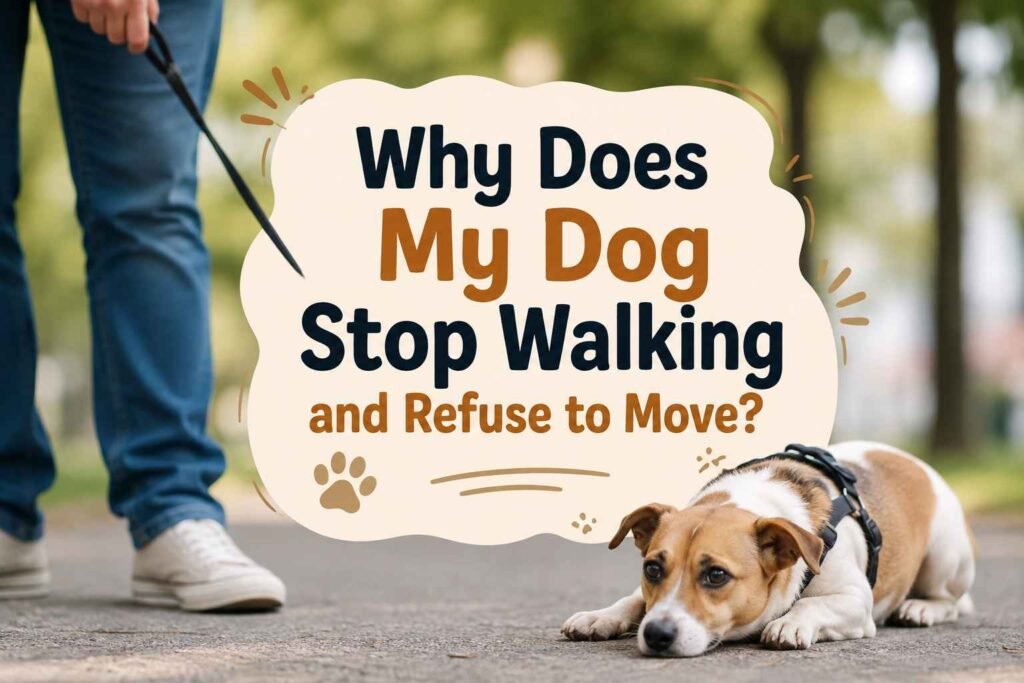
A dog that stops walking and won’t move may be communicating that something is wrong or that the current environment feels uncomfortable.
Some dogs simply stop and sit. Others pull backward, freeze in place, lie down, or stare at something. This is especially common when a dog encounters something unfamiliar or frightening.
Dog Freezing on Walks
Freezing is often associated with fear or uncertainty. Your dog may see another dog, hear traffic, notice construction equipment, or encounter an unfamiliar surface.
Instead of forcing your dog forward, pause and give it some space. Look around for the trigger and, if possible, move farther away from it.
Dog Won’t Budge on Walks
If your dog won’t budge on walks, avoid immediately assuming it is being stubborn. A dog may refuse to move because it is scared, uncomfortable, overwhelmed, or physically unable to continue.
Watch your dog’s body language. A tucked tail, lowered body, trembling, lip licking, avoidance, or repeated attempts to retreat can suggest stress or fear.
Why Does My Dog Lie Down and Refuse to Walk?
When a dog lies down and refuses to walk, the reason can range from fear to fatigue or physical discomfort. A puppy may lie down because the leash and outside environment are new. An adult dog may do it because something outside makes it nervous. An older dog may be experiencing joint pain or another mobility problem.
Pay attention to whether your dog can easily stand and walk at other times. If lying down is accompanied by limping, difficulty getting up, trembling, unusual panting, or reluctance to move around the house, contact your veterinarian.
Pain can cause dogs to walk more slowly, refuse to walk, have difficulty changing position, or avoid activities they normally enjoy.
Why Does My Dog Suddenly Refuse to Go on Walks?
A dog suddenly refusing to go on walks deserves more attention than a puppy that has never been comfortable with a leash.
A sudden change may happen after:
- An injury or painful movement
- A sore paw or damaged nail
- A frightening encounter
- Loud fireworks or traffic
- A bad experience with another dog
- A change in walking location
- Extreme heat or cold
- An uncomfortable harness or collar
- Illness or weakness
Think about what changed before the behavior started. Did your dog slip, get frightened, encounter another animal, or start wearing a new harness?
If the refusal continues or your dog appears painful or unwell, arrange a veterinary examination rather than assuming it is a training problem.
Why Is My Dog Scared to Go for Walks?
A dog scared to go for walks may have learned that the outside world is unpredictable or frightening. Traffic, motorcycles, barking dogs, crowds, construction sounds, unfamiliar people, and strange surfaces can all overwhelm a sensitive dog. Puppies can be especially unsure because they are still learning about the world.
Some dogs also develop fear after a negative experience. For example, being startled by a loud truck or attacked by another dog can make a previously confident dog nervous about returning to that area.
If fear is the problem, forcing your dog to keep walking can make the experience worse. Instead, create positive experiences and allow your dog to progress gradually. Positive reinforcement and short, manageable sessions are commonly recommended for leash and puppy training.
Why Won’t My Dog Walk Away From the House?
Some dogs happily step outside but refuse to walk away from the house. This can happen when home feels like the dog’s safe place. Your dog may be nervous about unfamiliar sights and sounds farther away.
Try making the first part of the walk extremely easy. Walk only a short distance, reward your dog for moving forward, and return home before the dog becomes overwhelmed.
You can gradually increase the distance as your dog becomes more confident. For puppies, changing the starting location can sometimes help because the home itself may become an anchor that encourages them to turn around.
Why Does My Dog Resist Walking on a Leash?
A dog may resist walking on a leash because the equipment feels strange, restrictive, or uncomfortable. This is particularly common in puppies that have never worn a collar or harness before. Dogs do not automatically understand what a leash means; leash walking is a skill that needs to be learned.
Check that the collar or harness fits correctly and does not rub or restrict your dog.
Start training indoors if necessary. Let your dog wear the equipment for short periods while receiving praise or treats. Once your dog is comfortable, practice taking a few steps and reward calm movement.
Avoid pulling your dog forward whenever possible. Rewarding the behavior you want can make leash training more positive and effective.
Why Won’t My Puppy Walk on a Leash?

A puppy won’t walk on a leash because walking on a leash is completely new to many young dogs. Your puppy may freeze, pull backward, sit down, or act confused when the leash is attached.
Puppy Plops Down and Won’t Walk
If your puppy plops down and won’t walk, don’t immediately drag it forward. The puppy may be frightened by the leash or overwhelmed by the environment.
Start somewhere quiet, such as inside your home or a calm outdoor area. Reward your puppy for looking at you, standing up, taking one step, and eventually walking several steps.
Puppy Scared of Leash Walking
A puppy scared of leash walking needs confidence rather than pressure. Pair the leash with treats, praise, play, and pleasant experiences.
The American Kennel Club recommends starting leash practice in familiar environments and gradually moving toward outdoor walks while keeping sessions short and positive.
Why Is My Dog Hesitant to Walk?
If your dog is hesitant to walk, look at when and where the hesitation happens.
For example, does your dog:
- Refuse to leave the house?
- Stop at a particular location?
- Freeze around traffic?
- Avoid other dogs?
- Refuse only when wearing a certain harness?
- Walk normally with another person?
- Stop only during hot or rainy weather?
These details can help you identify the likely trigger.
A dog that walks happily in a quiet area but freezes near busy roads may be experiencing environmental fear. A dog that refuses only when a specific harness is used may be uncomfortable with the equipment.
Could Pain Be Why My Dog Won’t Walk?
Yes. Pain should always be considered when walking refusal appears suddenly. Dogs may hide pain, and the first sign may simply be a change in normal activity. Possible clues include limping, walking slowly, difficulty getting up, avoiding stairs, reluctance to jump, unusual posture, trembling, or refusing to walk.
Check your dog’s paws for obvious problems and observe how it moves. Do not try to diagnose an injury yourself or give human pain medication unless your veterinarian specifically tells you to.
If your dog appears painful or does not want to use a limb, veterinary evaluation is appropriate. VCA notes that pain severe enough to make a pet unwilling to walk or use a limb should be evaluated.
How to Get a Stubborn Dog to Walk
Before calling your dog “stubborn,” try to determine why it is refusing. Fear, pain, confusion, and discomfort can all look like stubbornness.
Try these steps:
- Rule out pain or injury. If the refusal is sudden, check with your veterinarian.
- Check the leash and harness. Make sure the equipment is comfortable and properly fitted.
- Start somewhere quiet. Reduce traffic, noise, and other distractions.
- Use high-value rewards. Reward your dog for even small steps in the right direction.
- Keep sessions short. Several positive short sessions can be better than one frustrating walk.
- Allow sniffing. Sniffing can provide enrichment and make walks more rewarding.
- Increase distance gradually. Don’t expect a fearful dog to suddenly complete a long walk.
- Stay calm. Frustration can increase tension during an already difficult walk.
- Never drag your dog. Forcing a frightened dog forward can create a stronger negative association with walking.
Reward-based training is useful because dogs are more likely to repeat behaviors that produce something they value, such as treats, praise, play, or access to sniffing.
What to Do When Your Dog Stops Walking
When your dog stops walking, don’t immediately pull harder on the leash. Stop and calmly assess the situation.
Look for something that may have frightened your dog. Check the paws and observe whether your dog appears comfortable standing. If the trigger is obvious, create more distance.
If your dog relaxes and starts moving again, reward the behavior. If your dog continues refusing to move or appears uncomfortable, end the walk and consider whether veterinary advice is needed.
A dog won’t move on leash because of fear, discomfort, or training issues in many cases, but sudden inability or unwillingness to walk should not be dismissed.
When Should You Call a Vet?
Contact your veterinarian if your dog suddenly refuses to walk or the behavior is accompanied by signs of illness or pain.
Seek prompt veterinary attention if your dog:
- Is limping
- Won’t put weight on a leg
- Cries or yelps when moving
- Has difficulty standing
- Appears unusually weak or lethargic
- Has trouble getting up
- Shows an abnormal gait
- Appears to have significant pain
- Cannot walk normally
If your dog is unable to stand or walk without assistance, especially after trauma or injury, emergency veterinary care may be necessary.
How to Prevent Walking Problems in the Future
Good leash habits begin with positive experiences. Make sure your dog’s walking equipment is comfortable. Practice leash skills gradually, especially with puppies. Reward calm behavior and allow appropriate sniffing and exploration.
Avoid turning every walk into a strict training session. Your dog should have opportunities to enjoy being outside.
For puppies, introduce the leash and outdoor environments gradually rather than expecting them to immediately handle a busy sidewalk. Short, positive experiences can help build confidence.
If your dog has developed a fear of walking, professional help from a qualified, reward-based trainer or veterinary behavior professional can also be useful.
Frequently Asked Questions
Why won’t my dog let me walk it?
Your dog may refuse because of fear, pain, leash discomfort, anxiety, unfamiliar surroundings, or inadequate leash training. If the refusal is sudden, look for signs of pain or illness before treating it as a behavior problem.
Why does my dog suddenly refuse to walk?
A sudden refusal can be caused by pain, injury, paw problems, a frightening experience, uncomfortable equipment, weather, or illness. A sudden behavior change accompanied by pain or weakness should be discussed with a veterinarian.
Why does my dog stop walking and sit down?
Your dog may be frightened, overwhelmed, tired, uncomfortable, or in pain. Look for patterns, such as stopping near traffic or after putting on a particular harness, and watch for physical signs of discomfort.
Why is my dog freezing on walks?
Freezing can happen when a dog feels afraid or overwhelmed by something in the environment. Give your dog space, identify possible triggers, and avoid forcing it toward something that scares it.
Why won’t my puppy walk on a leash?
Puppies aren’t born knowing how to walk on a leash. A puppy may need gradual indoor practice, treats, praise, and short outdoor sessions before it becomes comfortable walking outside.
Should I drag my dog when it refuses to walk?
No. Dragging a fearful or uncomfortable dog can increase stress and create a more negative association with walking. First determine why your dog is refusing and use calm, reward-based training.
How do I get my dog to walk again?
Start by ruling out pain, checking the walking equipment, and identifying possible fear triggers. Then use short walks, high-value rewards, gradual exposure, and positive reinforcement to rebuild confidence.
Final Thoughts
A dog that refuses to walk is not necessarily being stubborn. Fear, pain, leash discomfort, anxiety, unfamiliar surroundings, and lack of confidence can all cause walking problems.
If your dog is a puppy, introduce leash walking gradually and keep early experiences positive. If your adult dog suddenly stops walking, pay closer attention to possible pain or illness.
Most importantly, don’t force your dog to push through obvious fear or discomfort. Identify the cause, make walking feel safe again, and seek veterinary help when the change is sudden or accompanied by concerning physical symptoms.