Can Dogs Have Candy Corn? – Symptoms, Risks & Warnings!

Candy corn is not safe for dogs because it contains high sugar, additives, and artificial dyes that may upset digestion. While small amounts may not always cause serious harm, dogs can still become sick after eating candy corn.
In this guide, you will learn why candy corn is dangerous for dogs, what symptoms to watch for, and safer treat options for your furry friend.
Can Dogs Eat Candy Canes?
Dogs should not eat candy canes because they contain large amounts of sugar and artificial flavoring that can upset a dog’s stomach. Eating candy canes may lead to vomiting, diarrhea, bloating, or stomach pain.
Some sugar-free candy canes are even more dangerous because they may contain xylitol, an artificial sweetener that is highly toxic to dogs. Candy canes are also very hard and sharp when broken, which can hurt a dog’s mouth or create choking risks.
If your dog accidentally eats a candy cane, check the ingredients carefully and watch for unusual symptoms. Safer dog treats are always a better choice during holidays.
Why Candy Corn Is Bad for Dogs
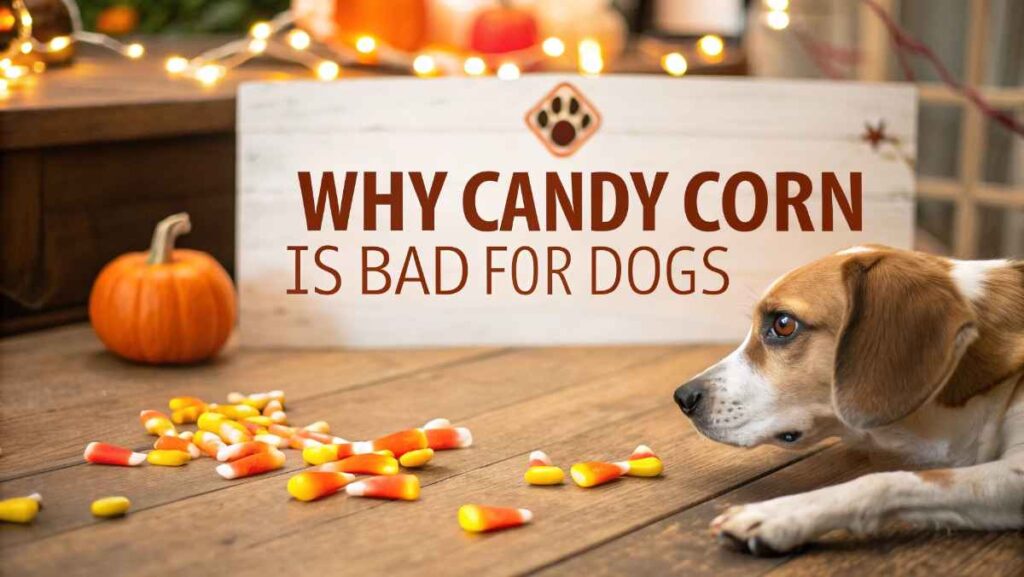
Candy corn is not made for dogs. The ingredients used in candy are designed for human taste, not for a dog’s digestive system.
Here are some reasons why candy corn is unhealthy for dogs:
- It contains too much sugar
- It may contain toxic sweeteners
- Artificial ingredients can upset digestion
- It can lead to obesity over time
- It may trigger pancreatitis in some dogs
Dogs process sugary foods differently than humans. Even if your dog seems fine after eating candy corn, too much sugar can still affect their health later.
Dangerous Ingredients Found in Candy Corn
Sugar
Candy corn is packed with sugar. Too much sugar can upset your dog’s stomach and lead to vomiting or diarrhea. Regular sugary treats may also contribute to weight gain and dental disease.
Dogs do not need added sugar in their diet. Feeding sweet foods often can increase the risk of obesity and diabetes over time.
Corn Syrup
Corn syrup is another major ingredient in candy corn. It adds extra sweetness but provides no nutritional value for dogs.
Large amounts of corn syrup may cause:
- Digestive discomfort
- Bloating
- Gas
- Loose stools
Dogs with sensitive stomachs may react badly after eating foods high in corn syrup.
Also Read: Can Dogs Eat Plantains: Benefits, Risks & Safe Feeding Tips
Artificial Sweeteners
Some sugar-free candies contain artificial sweeteners such as xylitol. This ingredient is extremely dangerous for dogs.
Xylitol can cause:
- Sudden drops in blood sugar
- Weakness
- Tremors
- Seizures
- Liver failure
Even a small amount can become an emergency. If you think your dog ate candy containing xylitol, contact a veterinarian immediately.
Artificial Food Coloring
Candy corn also contains artificial colors and flavors. These ingredients may irritate sensitive dogs and cause digestive issues. Although food coloring may not always be toxic, it still adds unnecessary chemicals to your dog’s diet.
Can Candy Corn Poison Dogs?
Regular candy corn is usually not considered highly poisonous, but it can still make dogs sick. The biggest danger comes from overeating or eating candy that contains xylitol.
Dogs react differently depending on:
- Their size
- Their age
- Their overall health
- The amount eaten
- The ingredients inside the candy
Small dogs may become sick after eating only a few pieces. Puppies are also at higher risk because their bodies are still developing.
If the candy contains xylitol, the situation becomes much more serious. Xylitol poisoning can happen quickly and may become life-threatening without treatment.
Symptoms to Watch For After Eating Candy Corn
If your dog eats candy corn, monitor them carefully for signs of illness.
Common symptoms include:
- Vomiting
- Diarrhea
- Stomach pain
- Bloating
- Excessive thirst
- Restlessness
- Weakness
- Loss of appetite
More serious symptoms may include:
- Tremors
- Seizures
- Loss of coordination
- Collapse
Symptoms can appear within a few hours after eating candy. Dogs that consumed xylitol may show signs very quickly. If your dog acts unusual, weak, or sick after eating candy corn, contact your veterinarian right away.
What To Do If Your Dog Eats Candy Corn
Dogs are curious and may eat candy if it is left within reach. If your dog accidentally eats candy corn, stay calm and follow these steps.
Check the Ingredients
First, look at the candy package. Check if the product contains xylitol or other harmful sweeteners. If you see xylitol listed, contact your veterinarian or an emergency animal clinic immediately.
Monitor Your Dog
Watch your dog closely for the next 24 hours. Pay attention to:
- Vomiting
- Diarrhea
- Weakness
- Shaking
- Strange behavior
Keep fresh water available and avoid giving more treats.
Contact a Veterinarian
You should call a veterinarian if:
- Your dog ate a large amount
- Your dog is very small
- The candy contains xylitol
- Symptoms appear
- Your puppy ate the candy
A veterinarian may ask about:
- Your dog’s weight
- The amount eaten
- The ingredient list
- When it happened
This information helps them decide the best treatment.
Do Not Make Your Dog Vomit Without Advice
Some owners try to make dogs vomit at home, but this can sometimes make the situation worse. Only follow instructions from a veterinarian before attempting any home treatment.
See Also: Can Dogs Eat Cactus? – Vet-Approved Safety Guide for Owners
Can Puppies Have Candy Corn?
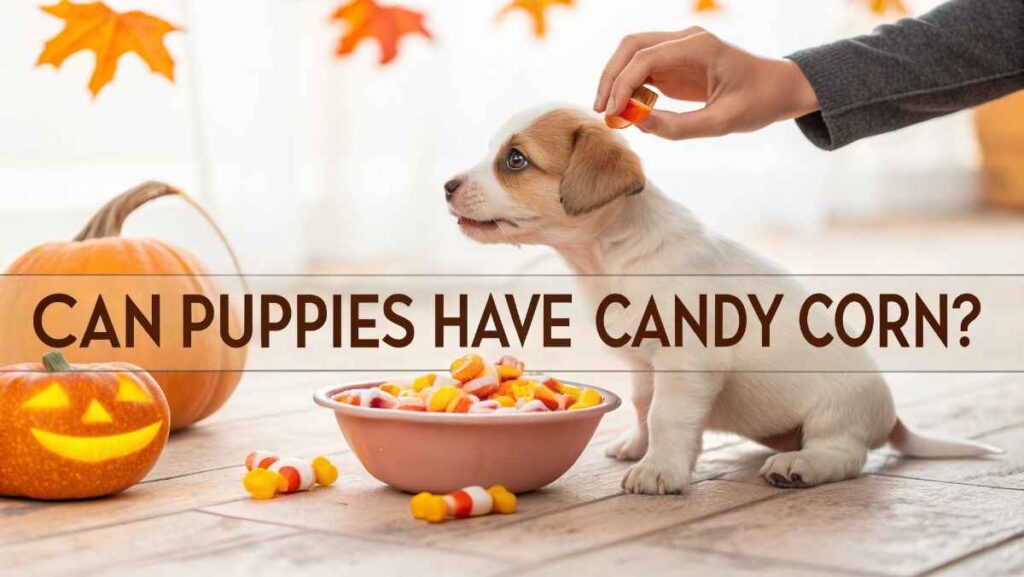
Puppies should never eat candy corn. Their smaller size makes them more sensitive to sugar and toxic ingredients. A few pieces that may seem harmless to a large adult dog can seriously affect a puppy.
Puppies also have sensitive digestive systems. Candy corn may cause:
- Diarrhea
- Vomiting
- Stomach pain
- Dehydration
Because puppies are still growing, unhealthy foods can affect their overall health more quickly. If your puppy eats candy corn, contact a veterinarian for guidance.
How Much Candy Corn Is Dangerous for Dogs?
There is no completely safe amount of candy corn for dogs. The danger depends on the ingredients and the amount consumed.
Here is a general risk guide:
| Dog Size | Possible Risk Level |
| Small Dogs | High Risk |
| Medium Dogs | Moderate Risk |
| Large Dogs | Lower Risk but Still Unsafe |
Even if regular candy corn does not contain xylitol, eating large amounts can still cause digestive problems or pancreatitis. Dogs with health conditions such as diabetes or obesity are at even greater risk.
Long-Term Risks of Sugary Candy for Dogs
Obesity
Candy contains empty calories and too much sugar. Dogs that regularly eat sugary snacks may gain unhealthy weight.
Obesity increases the risk of:
- Joint problems
- Heart disease
- Breathing issues
Diabetes
Too much sugar over time may affect blood sugar balance. Dogs with diabetes require careful diets, and sugary foods can worsen their condition.
Dental Problems
Candy sticks to teeth and may contribute to:
- Tooth decay
- Gum disease
- Bad breath
Dental disease can become painful and expensive to treat.
Pancreatitis
Pancreatitis is inflammation of the pancreas. Rich or sugary foods can sometimes trigger this painful condition.
Symptoms may include:
- Severe vomiting
- Abdominal pain
- Loss of appetite
- Weakness
Some cases require hospitalization.
Safe Halloween Treat Alternatives for Dogs
Instead of candy corn, choose healthier treats made for dogs.
Safe options include:
- Plain pumpkin
- Apple slices without seeds
- Carrot sticks
- Blueberries
- Dog-safe peanut butter treats
- Commercial dog treats
These options are much safer and provide better nutrition. During Halloween, keep candy bowls out of reach and remind children not to feed sweets to pets.
Must Read: Is Fabuloso Safe For Dogs? – Vet-Style Answer Explained!
When Should You Visit a Vet?
Contact a veterinarian immediately if:
- The candy contains xylitol
- Your dog has seizures
- Vomiting does not stop
- Your dog becomes weak
- Your dog collapses
- Your dog has trouble breathing
It is always safer to ask a professional when you are unsure.Fast treatment can prevent serious complications.
Tips To Prevent Dogs From Eating Halloween Candy
Store Candy Safely
Keep all Halloween candy in closed containers or high cabinets where your dog cannot reach it. Dogs are curious and may eat sweets quickly if candy is left on tables, couches, or near trick-or-treat bags around the house.
Teach the “Leave It” Command
Training your dog to understand the “leave it” command can help prevent accidents during Halloween. This simple command teaches dogs not to grab dropped candy, wrappers, or other dangerous foods they may find around the home.
Keep Trick-or-Treat Bowls Away
Place trick-or-treat candy bowls in safe spots where your dog cannot reach them easily. Some dogs may jump on tables or sniff around guests, especially when the house becomes busy and exciting during Halloween celebrations at night.
Tell Children Not To Feed Candy
Children may think sharing candy with pets is harmless, but many sweets can upset a dog’s stomach. Teach kids to give only dog-friendly treats and never offer chocolate, candy corn, or sugary Halloween snacks to pets.
Can Dogs Eat Candy
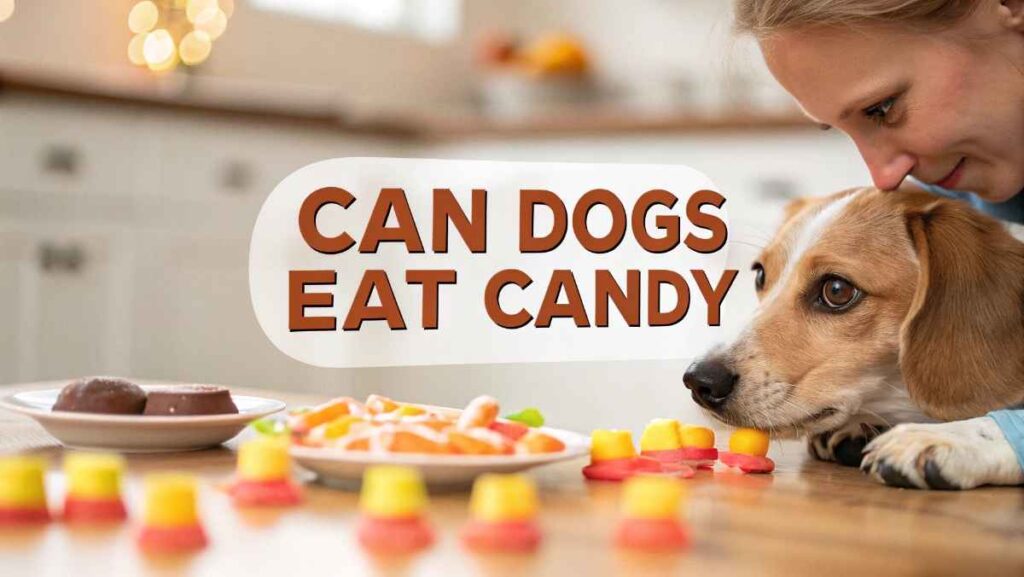
Dogs should not eat candy because most candies contain large amounts of sugar, artificial flavors, or harmful ingredients.
Some candies may even contain chocolate or xylitol, which can be toxic to dogs and cause serious health problems or stomach upset.
Can Dogs Have Candy Canes
Dogs should avoid candy canes because they contain high sugar levels and artificial flavoring. Sugar-free candy canes may also contain xylitol, which is dangerous for dogs. Sharp candy pieces can sometimes hurt a dog’s mouth or cause stomach discomfort after eating.
Can Dogs Have Candy Gummies
Candy gummies are not safe for dogs because they contain sugar, artificial colors, and sometimes xylitol. Eating gummy candy may cause vomiting, diarrhea, or stomach pain.
Sugar-free gummies are especially dangerous because xylitol poisoning can become life-threatening for dogs very quickly.
Can Candy Corn Kill Dogs
Candy corn usually does not kill dogs in small amounts, but eating too much may cause serious health problems.
Sugar-free candy corn with xylitol can become extremely dangerous and may lead to seizures, liver failure, or even death without fast veterinary treatment.
Does Candy Corn Have Xylitol
Regular candy corn usually does not contain xylitol, but some sugar-free products might include it. Always check the ingredient label carefully before assuming candy is safe. Xylitol is highly toxic to dogs and can cause severe reactions after only small amounts.
Does Brachs Candy Corn Have Xylitol
Traditional Brach’s candy corn generally does not contain xylitol, but ingredient recipes can change over time. It is always safest to read the package label before giving any food around dogs because some sweet products may contain dangerous artificial sweeteners.
Can Dogs Have Candy Yams
Dogs can eat plain cooked yams in small amounts, but candied yams are unhealthy because they contain sugar, butter, and sometimes marshmallows.
These added ingredients may upset a dog’s stomach and contribute to weight gain or digestive problems over time.
Can Dogs Have Candy Floss
Dogs should not eat candy floss because it contains large amounts of sugar and artificial coloring. Eating too much may cause stomach upset, vomiting, or diarrhea. Sugar-free candy floss may also contain xylitol, which is dangerous and toxic for dogs.
Can Dogs Have Candy Melts
Candy melts are not recommended for dogs because they contain sugar, oils, and artificial ingredients. Some products may also include chocolate or harmful flavorings. Eating candy melts can lead to digestive problems, weight gain, or more serious reactions in sensitive dogs.
Can Dogs Have Candy Apples
Dogs should not eat candy apples because the sugary coating is unhealthy and may upset their stomach. Apple seeds are also unsafe because they contain small amounts of cyanide. Plain apple slices without seeds are a much safer option for dogs.
FAQs
Can one piece of candy corn hurt a dog?
One small piece of regular candy corn may not seriously harm a healthy large dog, but it can still upset the stomach. Sugar-free candy containing xylitol can be very dangerous even in small amounts.
Is candy corn toxic to dogs?
Regular candy corn is unhealthy but not always highly toxic. However, sugar-free versions with xylitol are extremely toxic to dogs and require emergency care.
What happens if my dog eats candy corn?
Dogs may develop vomiting, diarrhea, stomach pain, bloating, or restlessness after eating candy corn. Serious reactions are possible if toxic ingredients are present.
Does candy corn contain xylitol?
Some sugar-free candy products may contain xylitol. Always check the ingredient label carefully before assuming the candy is safe.
Should I take my dog to the vet after eating candy corn?
You should contact a veterinarian if your dog ate a large amount, shows symptoms, or consumed candy containing xylitol.
Can puppies eat candy corn safely?
No, puppies should not eat candy corn. Their small size and sensitive digestive systems make them more vulnerable to harmful effects.
Why is Halloween candy dangerous for dogs?
Many Halloween candies contain sugar, chocolate, artificial sweeteners, and other ingredients that may be toxic or unhealthy for dogs.
Final Verdict
Candy corn is not a safe treat for dogs. It contains high amounts of sugar, corn syrup, and artificial ingredients that may upset your dog’s stomach and harm their health. Some sugar-free versions may also contain xylitol, which is extremely toxic to dogs.
A small piece of regular candy corn may not always cause serious harm, but it is still best to avoid feeding it to pets. Puppies and small dogs face greater risks because their bodies are more sensitive.
If your dog accidentally eats candy corn, monitor them closely and contact a veterinarian if symptoms appear. Safer dog-friendly treats are always the better choice.