Can Dogs Eat Crackers? – The Complete Guide for Dog Owners

Yes, dogs can eat plain crackers in small amounts, but they’re high in salt, fat, and calories so only offer them rarely as an occasional treat.
In this article, you’ll find out exactly which crackers are safe for your dog and which ones could send you straight to the vet.
What Happens When a Dog Eats a Cracker?
If your dog sneaks a cracker off the floor, don’t panic. One plain cracker is unlikely to cause any serious harm. But that doesn’t mean crackers are a good snack choice for dogs.
Most crackers are made for human taste, not for a dog’s health. They’re full of salt, refined flour, oils, and preservatives. None of these things are what your dog actually needs. In small amounts, they won’t cause an emergency. But over time, or in large amounts, they can cause real problems.
Think of it this way. Crackers are like junk food for dogs. A chip or two won’t kill you, but you wouldn’t make it a daily meal. Same idea here.
Why Crackers Are Not Good for Dogs
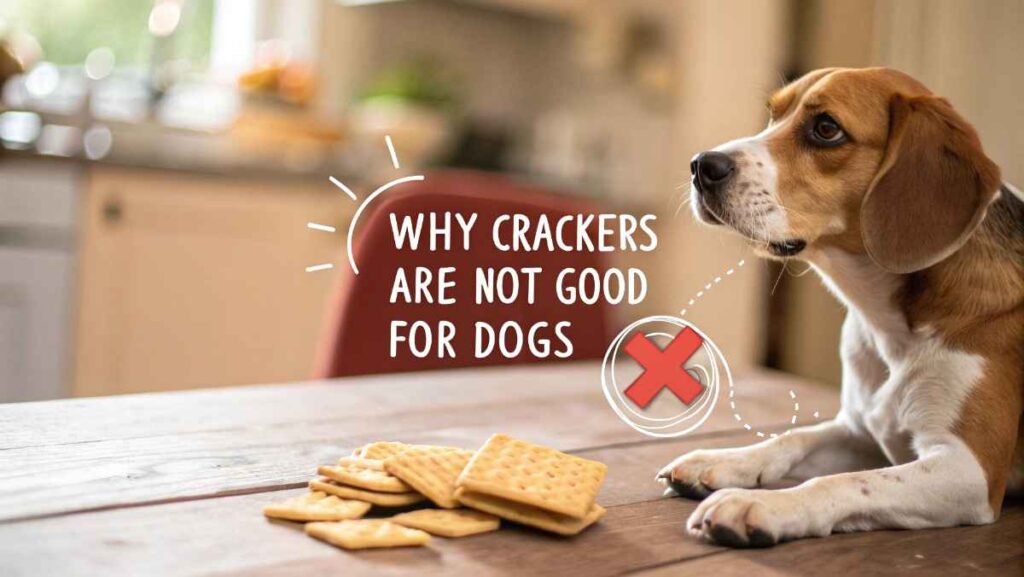
Here’s why most vets and pet experts say crackers are a poor snack choice:
Too Much Salt
This is the biggest issue. Most crackers, even the ones that don’t taste salty, contain a surprising amount of sodium. Dogs need very little salt in their diet. Their regular dog food already has the right amount.
When you add crackers on top of that, the sodium levels can get too high. This can lead to excessive thirst, frequent urination, dehydration, and in serious cases, sodium ion poisoning. Signs of salt poisoning include vomiting, diarrhea, tremors, and extreme tiredness.
Empty Calories
Crackers are mostly made from refined white flour. This type of flour has had most of its vitamins and fiber stripped away. So your dog is getting calories but nothing useful.
Those extra calories can lead to weight gain, especially in smaller dogs. Even gaining a pound or two can have a big effect on a small dog’s overall health.
Fat Content
Crackers contain oils and fats to give them that crispy texture. While a small amount of fat in your dog’s diet is fine, too much can trigger pancreatitis, which is a painful inflammation of the pancreas. This condition can be very serious and sometimes requires emergency veterinary treatment.
Preservatives and Additives
Commercial crackers often contain artificial flavors, colors, and preservatives. These aren’t made for dogs, and while most won’t cause immediate harm, they can upset a sensitive stomach and add zero benefit to your dog’s diet.
Toxic Ingredients to Watch Out For
This is the really important part. Some crackers don’t just give your dog empty calories. They contain ingredients that are genuinely dangerous.
Xylitol
This is an artificial sweetener found in many sugar-free products, including some crackers and peanut butter. Even a tiny amount of xylitol can cause a dangerous drop in your dog’s blood sugar. It can also lead to liver failure. Always check the ingredient label before sharing anything sweet with your dog.
Garlic and Onion Powder
Many flavored crackers contain these as seasonings. Both garlic and onion belong to the same plant family, and both are toxic to dogs.
They damage red blood cells and can cause a condition called hemolytic anemia. Even small amounts, eaten regularly, can build up and cause serious harm.
Chocolate
Some sweet crackers or cookie-style crackers may contain chocolate or cocoa. Chocolate is one of the most well-known toxic foods for dogs.
It can cause vomiting, rapid heart rate, seizures, and in severe cases, death. Never give your dog any cracker that contains chocolate.
Excessive Sugar
High sugar content can lead to obesity, tooth decay, and over time, even diabetes in dogs. Many sweet crackers like graham crackers and animal crackers are loaded with sugar.
Types of Crackers and Which Ones Are Safe
Not all crackers are the same. Here’s a simple breakdown:
Saltine Crackers
Saltines are one of the most common crackers in any kitchen. Dogs can eat one or two without serious harm, but they’re high in sodium. Making them a regular treat is a bad idea. Skip these if you can.
Graham Crackers
Graham crackers are sweet and made from whole wheat flour. The basic ingredients aren’t toxic, but the high sugar content makes them unsuitable for regular feeding.
Also, some brands add xylitol, which is very dangerous. Always check the label. One small piece occasionally is unlikely to hurt, but it’s better to avoid them altogether.
Ritz Crackers
Ritz crackers are buttery and tasty but they’re high in fat, salt, and calories. These are one of the worst cracker choices for dogs. The fat content alone can upset your dog’s stomach or worse, contribute to pancreatitis. Keep these away from your pup.
Animal Crackers
Animal crackers are sweet, and they often contain artificial flavors and colors. They aren’t toxic in small amounts, but they offer no nutrition for dogs.
If the animal crackers contain chocolate coating or xylitol, they become dangerous immediately. Plain, simple animal crackers in a very small amount are okay once in a while but they’re not a treat worth making a habit of.
Peanut Butter Crackers
This one surprises many people. Plain peanut butter is actually safe for dogs in small amounts but peanut butter crackers are a different story. They contain added salt, sugar, and preservatives.
And some peanut butter products contain xylitol, which is toxic. If you want to give your dog a peanut butter treat, use a plain, xylitol-free peanut butter on its own, not a processed peanut butter cracker.
Rice Crackers
Plain, unseasoned rice crackers are the safest option if you really want to share a cracker with your dog. They’re lower in sodium and don’t usually contain harmful additives.
If your dog has a wheat allergy, rice crackers are a better choice than wheat-based ones. Still, keep the amount small and occasional.
Unsalted Plain Crackers
These are the safest type of cracker you can give a dog. No added seasonings, no harmful ingredients, low sodium. One or two as a rare treat is fine. But remember, they still offer no real nutritional benefit.
How Many Crackers Can a Dog Have?

A good rule of thumb that many vets follow is the 10% rule. Treats of any kind should make up no more than 10% of your dog’s daily calorie intake.
To put that in perspective, a medium-sized dog that eats around 800 calories per day should have no more than 80 calories from treats.
A single Ritz cracker has around 16 calories. So even a few crackers can eat into that treat allowance quickly, and crackers don’t offer any nutrition in return.
For small dogs, the numbers are even tighter. Every extra calorie matters more when your dog only weighs 10 to 15 pounds.
Healthy Alternatives to Crackers
If you want to give your dog a snack they’ll enjoy and that is actually good for them, here are some much better options:
Carrots are crunchy, low in calories, and great for teeth. Apple slices are sweet and full of fiber, just remove the seeds and core first. Blueberries are full of antioxidants and most dogs absolutely love them. Watermelon is refreshing and hydrating, but remove the seeds and rind before serving.
Sweet potato slices, baked or boiled with no seasoning, are another great choice. Plain rice cakes are a lower-risk cracker alternative with minimal ingredients. Plain cooked chicken is high in protein and easy for dogs to digest.
These snacks give your dog something to enjoy without the salt, sugar, and preservatives that come with most crackers.
What If My Dog Already Ate Crackers?
Don’t panic. If your dog grabbed a plain cracker or two off the floor, they’re going to be fine. Watch them for a couple of hours and make sure they have access to fresh water.
You should call your vet if your dog ate a large amount of crackers, if the crackers contained garlic, onion, xylitol, or chocolate, if your dog shows signs like vomiting, diarrhea, excessive thirst, weakness, or unusual behavior, or if your dog is very small and ate more than a few crackers.
When in doubt, a quick call to your vet is always the right move. It’s better to ask than to wait and worry.
Can Dogs Eat Crackers Everyday?
No, dogs should not eat crackers every day. Crackers are full of salt, fat, and empty calories. Eating them daily can lead to weight gain, dehydration, and serious health problems over time. Stick to proper dog food and healthy treats instead.
Can Dogs Eat Graham Crackers?
Dogs can eat a tiny piece of graham cracker once in a while, but it is not a good idea. Graham crackers are high in sugar, which can cause weight gain and dental problems. Always check the label for xylitol before sharing any with your dog.
Can Dogs Eat Animal Crackers?
Plain animal crackers are not toxic to dogs in very small amounts, but they contain sugar and artificial ingredients that dogs do not need.
They offer zero nutrition. If the crackers have chocolate or xylitol in them, keep them away from your dog completely.
Can Dogs Eat Ritz Crackers?
Ritz crackers are not a good snack for dogs at all. They are loaded with fat, salt, and calories. Even a few Ritz crackers can upset your dog’s stomach. Too much fat over time can also lead to a painful condition called pancreatitis.
Can Dogs Eat Peanut Butter Crackers?
Peanut butter crackers may seem like a fun treat, but they are not safe for dogs. They contain added salt, sugar, and preservatives.
Some also contain xylitol, which is very toxic to dogs. If you want to give peanut butter, use a plain xylitol-free version only.
Can Dogs Eat Saltine Crackers?
One or two saltine crackers will not seriously harm your dog. But saltines are very high in sodium, and dogs do not need much salt at all.
Eating saltines regularly can cause dehydration and sodium poisoning. It is better to skip them and choose a healthier snack.
Can Dogs Eat Rice Crackers?
Plain, unseasoned rice crackers are one of the safer cracker options for dogs. They are lower in sodium and usually free from harmful additives. If your dog is allergic to wheat, rice crackers are a gentler option. Still, only give a small amount occasionally.
Can Dogs Eat Crackers for Upset Stomach?
No, crackers are not a good remedy for a dog’s upset stomach. Unlike humans, dogs do not benefit from eating crackers when they feel sick.
Plain boiled rice and chicken are much better options. If your dog’s stomach problems continue, visit your vet right away.
Are Unsalted Crackers Safe for Dogs?

Unsalted crackers are the safest cracker type you can give your dog. They have no added salt and are usually free from harmful seasonings. That said, they still offer no real nutrition for dogs. One or two as an occasional treat is perfectly fine.
Can Dogs Eat Crackers with Salt?
Salted crackers are not a good choice for dogs. Dogs are very sensitive to sodium, and even a small amount of extra salt can cause excessive thirst, dehydration, and in larger amounts, sodium ion poisoning. Always choose unsalted options if you want to share a cracker with your pup.
Can Dogs Eat Townhouse Crackers?
Townhouse crackers are not a safe choice for dogs. They are high in fat, salt, and butter flavoring that dogs do not need. One small piece will not cause an emergency, but feeding them regularly can lead to weight gain and stomach issues over time.
Can Dogs Eat Skyflakes Crackers?
Skyflakes crackers are plain and simple, but they still contain sodium and refined flour that offer nothing useful to your dog.
A tiny piece here and there is unlikely to cause harm. However, they should never become a regular snack because they add empty calories to your dog’s diet.
Can Dogs Eat Club Crackers?
Club crackers are not recommended for dogs at all. They contain a high amount of salt, fat, and butter that can upset your dog’s digestive system.
Eating too many club crackers can even lead to sodium poisoning in smaller dogs. It is better to keep these away from your pup completely.
FAQs
What Kind of Crackers Can Dogs Eat?
Plain, unsalted, and unflavored crackers are the safest option. Always avoid crackers with garlic, onion, xylitol, or chocolate inside them.
Will My Dog Die From a Saltine Cracker?
No, one saltine cracker will not kill your dog. But regularly feeding salty crackers can cause serious sodium poisoning over time.
Can Dogs Eat Crackers Safely?
Yes, dogs can eat plain crackers safely in very small amounts. Avoid flavored, salted, or sweet varieties that contain harmful ingredients.
How Many Crackers Can I Give My Dog?
One or two plain crackers occasionally is enough. Treats should never exceed 10% of your dog’s total daily calorie intake.
What Should I Do If My Dog Eats a Lot of Crackers?
Give your dog fresh water immediately. Watch for vomiting, diarrhea, or unusual behavior and call your vet if symptoms appear quickly.
Are There Any Crackers That Are Completely Safe for Dogs?
Plain unsalted crackers and plain rice crackers are the safest options. Even these should only be given in very small amounts occasionally.
What Are Better Treat Alternatives for Dogs?
Carrots, blueberries, apple slices, and plain cooked chicken are much healthier treat options. These give real nutrition without harmful salt or sugar.
What Is the One Meat to Never Feed a Dog?
Never feed your dog processed deli meats like salami or bologna. They are loaded with salt, preservatives, and spices toxic to dogs.
Is Salmon or Tuna Better for Dogs?
Salmon is better for dogs. It is rich in healthy omega-3 fatty acids. Always serve it fully cooked and never raw or seasoned.
My Dog Just Ate a Baked Cracker. Should I Be Worried?
One plain baked cracker is nothing to worry about. Just give fresh water and watch your dog for any unusual signs afterward.
Conclusion
So, can dogs eat crackers? The simple answer is yes, but only in very small amounts and not very often.
Plain, unsalted crackers will not hurt your dog if they grab one off the floor. But crackers were never made for dogs. They are full of salt, fat, refined flour, and preservatives that your dog’s body simply does not need. Some crackers even contain ingredients like xylitol, garlic, onion, and chocolate that can be genuinely dangerous and even life-threatening.
The truth is, your dog is not picky. They will happily eat a carrot, a blueberry, or a slice of apple with the same excitement they show for a cracker. So why not give them something that actually does their body some good?
If your dog ever eats a large amount of crackers, or if the crackers contained any harmful ingredients, do not wait. Call your vet straight away. It is always better to be safe than sorry when it comes to your pet’s health.
Keep crackers for yourself, choose better snacks for your pup, and your dog will live a happier and healthier life because of it.