No, pure peppermint essential oil is generally not safe for dogs to ingest, apply to their skin, or inhale in high concentrations. It can cause vomiting, diarrhea, skin irritation, coughing, breathing problems, and other serious reactions. Keep concentrated peppermint oil away from dogs and seek veterinary advice after accidental exposure.
In this article, discover whether peppermint oil is safe for dogs, understand potential risks, signs of exposure, and safer options for protecting your dog’s health.
Is Peppermint Oil Safe for Dogs?
Pure peppermint essential oil is not something you should intentionally give your dog without veterinary guidance. Concentrated essential oils can cause problems when swallowed, placed directly on the skin, or inhaled in strong amounts. Dogs can also lick oil from their fur after topical exposure, creating an additional route of ingestion.
Veterinary toxicology guidance explains that essential oils can be rapidly absorbed through the gastrointestinal tract, skin, lungs, and mucous membranes. Higher concentrations generally create greater risks. For that reason, concentrated essential oils should never be directly applied to a dog.
The important distinction is between peppermint as a plant ingredient and peppermint essential oil. A tiny amount of peppermint in a properly formulated dog product is not equivalent to a bottle of concentrated essential oil.
If your dog has accidentally encountered peppermint oil, the safest response is to consider how much exposure occurred, what concentration the product contains, and whether your dog is showing any symptoms.
Is Peppermint Essential Oil Safe For Dogs?

Peppermint essential oil is not considered safe for dogs when used improperly or in concentrated form. It should not be given by mouth or applied directly to a dog’s skin. Strong exposure may cause drooling, vomiting, skin irritation, breathing problems, tremors, or other serious reactions. If your dog is accidentally exposed, contact a veterinarian for guidance rather than trying a home remedy.
Is Peppermint Safe for Dogs?
Peppermint can be safe for dogs in small amounts when it is plain and appropriately prepared, but concentrated peppermint products require caution. Fresh peppermint leaves are different from peppermint essential oil, which is highly concentrated and can cause irritation or illness if swallowed or used improperly. Avoid peppermint candy, gum, and products containing xylitol. When introducing peppermint, choose dog-safe products and consult your veterinarian first.
Is Peppermint Oil Bad for Dogs?
Peppermint oil can be bad for dogs, especially when it is concentrated, swallowed, or applied directly to the skin. Exposure may cause drooling, vomiting, diarrhea, skin irritation, breathing problems, weakness, tremors, or seizures in serious cases. Never give peppermint essential oil orally or use it undiluted on your dog. If accidental exposure occurs, remove the source and contact your veterinarian for appropriate guidance.
Can Dogs Have Peppermint?
Dogs may tolerate small amounts of plain peppermint leaves, but peppermint products are not all safe. Peppermint essential oil is highly concentrated and should not be given orally or applied directly to dogs. Peppermint candy and gum should also be avoided because they may contain xylitol, which is highly toxic to dogs. For a safer option, choose peppermint products specifically formulated for dogs and follow veterinary guidance.
What Happens If a Dog Is Exposed to Peppermint Oil?
The effects of essential-oil exposure can vary considerably. A dog that briefly encounters a diluted product may have a different reaction from a dog that swallows concentrated oil.
After ingestion or skin exposure, possible signs can include drooling, vomiting, tiredness, loss of appetite, wobbliness, and skin irritation. More serious essential-oil exposures can cause tremors, low body temperature, breathing problems, seizures, or other systemic complications.
The route of exposure matters as well. Inhalation of strong fragrances can irritate the eyes and respiratory tract. Dogs may develop watery eyes or noses, coughing, wheezing, drooling, nausea, or difficulty breathing after significant inhalation exposure.
This is why it is better to avoid experimenting with concentrated peppermint oil at home.
Signs of Peppermint Oil Toxicity in Dogs
A dog exposed to peppermint oil may initially develop relatively mild symptoms, particularly gastrointestinal irritation. Vomiting, diarrhea, drooling, reduced appetite, or unusual tiredness can occur after essential-oil exposure.
More concerning signs include difficulty walking, tremors, weakness, breathing difficulty, or seizures. Skin exposure may cause irritation, especially if concentrated oil contacts sensitive skin.
The timing can vary depending on the oil, concentration, amount, and route of exposure. Essential-oil poisoning signs can develop within minutes to hours, so a dog that appears normal immediately after exposure should still be watched carefully if a significant exposure occurred.
If your dog develops severe symptoms, do not wait for them to disappear on their own. Contact a veterinarian promptly.
What Should You Do If Your Dog Licks Peppermint Oil?
If your dog licks peppermint oil, first move the product away and prevent additional exposure. Try to determine exactly what product was involved and check its label for the oil concentration and other ingredients.
Do not make your dog vomit unless a veterinarian specifically instructs you to do so. Essential oils can create an aspiration risk, meaning oil or vomit can potentially enter the lungs. Veterinary toxicology guidance specifically warns against inducing vomiting after essential-oil exposure because of this risk.
If oil has gotten onto your dog’s coat or skin, contact your veterinarian for advice about appropriate decontamination. If your dog is coughing, struggling to breathe, trembling, vomiting repeatedly, becoming extremely weak, or having a seizure, veterinary attention should be treated as urgent.
Keeping the original bottle or taking a picture of its ingredient label can also help the veterinarian understand what your dog encountered.
Can Dogs Smell Peppermint Oil Safely?
A dog smelling a peppermint-scented environment is different from swallowing concentrated peppermint oil, but strong fragrances can still be unpleasant or irritating.
Dogs have a highly developed sense of smell, so a scent that seems mild to a person can be overwhelming to a dog. If your dog moves away from a strong peppermint smell, coughs, sneezes, develops watery eyes, or seems uncomfortable, remove the source and provide fresh air.
There is also no good reason to force a dog to inhale peppermint oil as a home treatment for congestion, anxiety, or another health problem. Essential oils have limited evidence for safe and effective use in dogs, and veterinary references note that dosing and long-term safety remain uncertain.
Are Peppermint Oil Diffusers Safe Around Dogs?
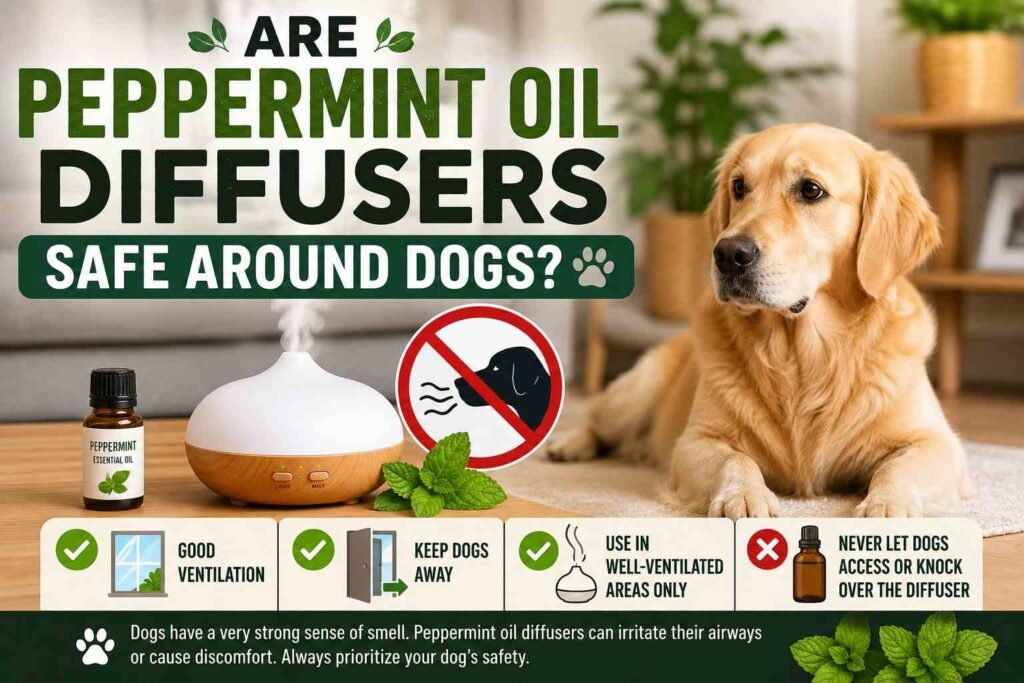
Diffusers require extra caution because they can expose a dog through the respiratory system. Passive diffusers, such as reed diffusers, generally create a fragrance rather than spraying oil droplets into the air, while active diffusers can release tiny oil particles.
Active diffusers can create an additional exposure route because oil particles may settle on a dog’s coat. The dog can then absorb the oil through the skin or swallow it while grooming.
If you use an essential-oil diffuser in your home, keep your dog away from the immediate area, provide good ventilation, and make sure the dog can move away from the scent. Never place a diffuser where your dog could knock it over or lick the oil.
Dogs with existing respiratory problems may be especially sensitive to strong fragrances.
Can Peppermint Oil Be Applied to a Dog’s Skin?
Pure peppermint essential oil should not be applied directly to your dog’s skin. Concentrated oils can cause skin irritation and may be absorbed into the body. Once the oil reaches the coat, your dog may also lick it and swallow it.
The fact that an essential oil is diluted does not automatically make it safe for every dog. Safety depends on the final concentration, product ingredients, application area, the dog’s size and health, and the possibility of licking.
For these reasons, avoid homemade peppermint-oil treatments unless your veterinarian has specifically recommended a particular product and method.
Does Diluting Peppermint Oil Make It Safe for Dogs?
Dilution lowers the concentration, but it does not turn an essential oil into a risk-free product. Giving a universal homemade dilution ratio can also be misleading because dogs differ in size, age, health, and sensitivity.
Veterinary toxicology guidance recommends using diluted rather than concentrated oils when essential oils are used, but it also emphasizes preventing ingestion and avoiding direct application of concentrated products.
If you are considering a peppermint-containing topical product for your dog, it is safer to discuss the specific product with your veterinarian rather than relying on a recipe found online.
Can Peppermint Oil Help With Fleas or Ticks?
Peppermint oil is sometimes promoted as a natural way to repel fleas and ticks. However, that does not make it a dependable replacement for veterinary-approved parasite prevention.
Flea and tick infestations can cause itching, skin damage, anemia, and transmit disease. Essential oils may also expose your dog to unnecessary risks when applied incorrectly.
Instead of relying on peppermint oil as the main defense against parasites, talk with your veterinarian about an appropriate flea and tick prevention plan for your dog.
Can Peppermint Oil Help a Dog’s Digestion?
Peppermint is often associated with digestive comfort in human products, which can lead owners to wonder whether peppermint oil can help dogs with gas, nausea, or bloating.
However, that does not mean concentrated peppermint essential oil should be given orally. Essential oils can irritate the gastrointestinal tract and may cause vomiting, drooling, diarrhea, or other problems after ingestion.
If your dog frequently has digestive problems, the underlying cause should be investigated instead of treating the symptoms with essential oil. Changes in diet, parasites, food intolerance, infections, and other health conditions can all contribute to digestive symptoms.
Can Peppermint Oil Help With a Dog’s Breathing?
The cooling sensation associated with peppermint can make people feel as though their airways are clearer, but that does not mean peppermint oil is an appropriate treatment for a dog’s breathing problems.
Strong fragrances may actually irritate the respiratory tract. Inhalation exposure can result in coughing, wheezing, watery eyes or nose, drooling, and difficulty breathing.
If your dog is struggling to breathe, do not rely on peppermint oil or another essential oil. Breathing difficulty can be caused by serious conditions and needs proper veterinary assessment.
Are Peppermint Products Safer Than Pure Peppermint Oil?
Not all peppermint products are the same. A dog dental treat made with a carefully controlled amount of peppermint is very different from concentrated essential oil intended for aromatherapy.
Dog-specific products are generally the better choice when peppermint is included because they are designed with canine use in mind. Even then, read the ingredient label and follow the feeding or application instructions.
Human peppermint products deserve more caution. Candy, gum, mints, and other sweet products may contain ingredients that are unsafe for dogs. In particular, xylitol is a serious concern because it can cause a rapid drop in blood sugar and potentially liver failure.
Can Dogs Eat Peppermint Leaves?
Peppermint leaves and peppermint essential oil should not be treated as the same thing. Essential oil is highly concentrated, while a leaf contains much lower amounts of the plant’s volatile compounds.
Still, eating a large amount of mint is not a good idea. The ASPCA lists mint as toxic to dogs because of its essential oils and notes that large ingestions can cause vomiting and diarrhea.
If your dog has eaten a small accidental amount of a plant, monitor them and contact your veterinarian if symptoms develop. Large or unusual ingestions should be discussed with a veterinary professional.
Why Peppermint Candy and Gum Can Be Dangerous
Peppermint candy and gum can create a completely different safety problem. Some sugar-free products contain xylitol, an ingredient that can be extremely dangerous to dogs.
Xylitol can trigger a rapid insulin response and cause dangerously low blood sugar. Serious cases can also involve liver failure.
For that reason, never give your dog human peppermint gum, candy, or breath mints unless you have confirmed that the product is appropriate for dogs. If your dog eats a product containing xylitol, contact a veterinarian immediately.
Are Puppies and Older Dogs More Sensitive?
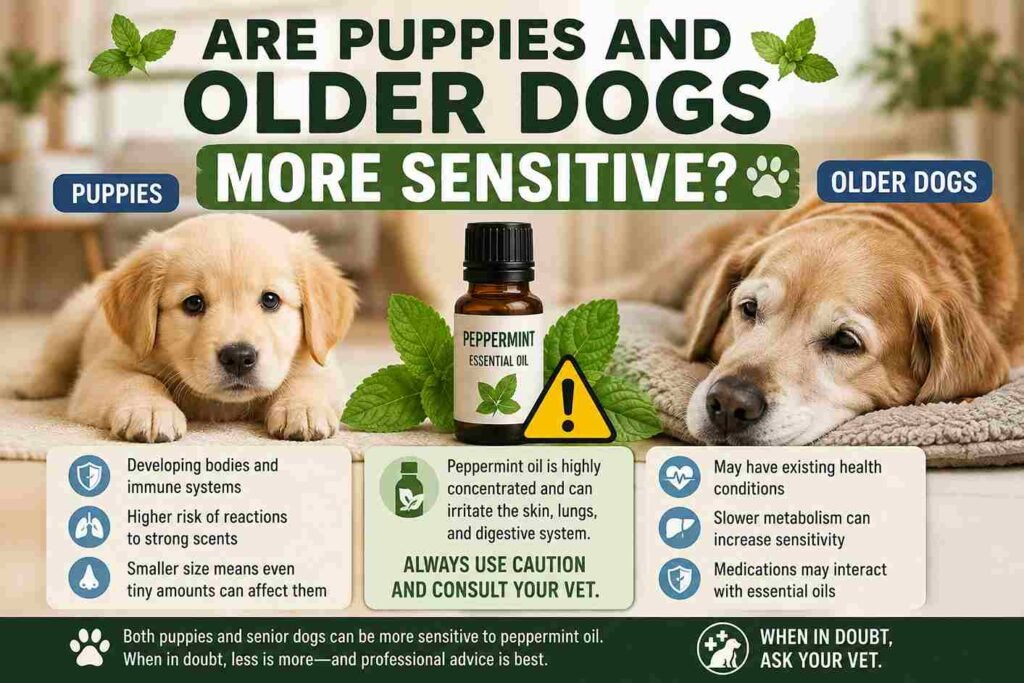
Extra caution is appropriate with puppies, senior dogs, and dogs that already have health problems. A small dog may also receive a greater exposure relative to body weight than a larger dog.
Their individual health, medications, respiratory condition, and the amount of exposure can all affect how they respond. This is another reason not to assume that a dilution that seemed harmless for one dog will be appropriate for another.
When dealing with a puppy or older dog, it is better to ask your veterinarian before intentionally using an essential-oil product.
What Are Safer Options for Common Reasons People Use Peppermint Oil?
The best alternative depends on why you want to use peppermint oil in the first place. For fleas and ticks, veterinarian-approved parasite preventives are more dependable than homemade essential-oil sprays. For bad breath, regular tooth brushing, dental care, and dog-specific dental products are better choices.
If your dog has digestive problems, recurring itching, anxiety, or breathing symptoms, treating the underlying problem is more useful than covering it with peppermint fragrance. A veterinarian can help determine what is actually causing the problem and recommend an appropriate treatment.
When Should You Call a Veterinarian?
Contact your veterinarian if your dog has swallowed concentrated peppermint oil, had significant skin exposure, or developed symptoms after inhaling a strong essential-oil fragrance.
Urgent veterinary care is particularly important if you notice repeated vomiting, severe drooling, weakness, tremors, loss of coordination, breathing difficulty, collapse, or seizures.
When you call, be ready to explain the product involved, its ingredients and concentration if available, approximately how much your dog encountered, when the exposure happened, and your dog’s size and current symptoms. This information can help the veterinarian assess the situation more accurately.
Peppermint Oil for Dogs: Safety Dos and Don’ts
The safest approach is simple: keep concentrated peppermint oil away from your dog, never intentionally give it orally, and do not apply pure essential oil directly to the skin. If you use scented products in your home, make sure your dog can move away from strong fragrances and prevent access to spilled oil.
Most importantly, do not assume that something is safe just because it is labeled natural. Essential oils are concentrated substances, and veterinary sources recognize that dogs can develop toxic effects after significant exposure.
Frequently Asked Questions About Peppermint Oil Dogs
Is peppermint oil toxic to dogs?
Concentrated essential oils can be harmful to dogs, particularly when swallowed or applied directly to the skin. The severity depends on the oil, concentration, amount, and exposure route.
Can dogs smell peppermint oil?
Dogs can smell peppermint oil, but strong fragrances may irritate some dogs. If your dog shows coughing, watery eyes, sneezing, or discomfort, move them away from the scent and provide fresh air.
Can dogs eat peppermint candy?
Peppermint candy is best avoided. Human candy may contain large amounts of sugar, and sugar-free varieties may contain xylitol, which can be dangerous to dogs.
Is peppermint oil safe for dogs to smell?
Peppermint oil is not ideal for dogs to smell in concentrated amounts. Strong scents may irritate their nose and airways, so use good ventilation and let your dog leave the area.
Is peppermint oil safe for dogs skin?
Pure peppermint oil should not be applied directly to a dog’s skin. It can cause irritation and may be absorbed or licked from the coat. Ask a veterinarian before topical use.
Does peppermint oil hurt dogs?
Yes, concentrated peppermint oil can hurt dogs if swallowed, applied directly to the skin, or inhaled heavily. It may cause drooling, vomiting, skin irritation, breathing problems, tremors, or other serious symptoms.
Can you use peppermint oil on dogs?
You should not use pure peppermint essential oil on dogs without veterinary guidance. Concentrated oil can irritate the skin and may be harmful if your dog licks or ingests it.
Is peppermint oil OK for dogs?
Peppermint essential oil is not generally considered a safe home remedy for dogs. Avoid giving it orally or applying it directly, and use only veterinarian-approved pet products containing peppermint.
Is peppermint oil dangerous for dogs?
Yes, concentrated peppermint oil can be dangerous for dogs, especially when swallowed or used undiluted. Exposure may cause digestive, skin, respiratory, or neurological problems depending on the amount and concentration.
Is peppermint spray safe for dogs?
Peppermint spray is not automatically safe for dogs. Safety depends on its ingredients and concentration. Avoid human peppermint sprays and choose products specifically formulated for dogs after veterinary advice.
Is diluted peppermint oil safe for dogs to smell?
Dilution reduces the concentration but does not guarantee safety. Dogs may still be irritated by peppermint vapors, so avoid strong scents, provide ventilation, and allow your dog to leave the area.
Should I use peppermint oil on my puppy?
It is best not to use concentrated peppermint essential oil on a puppy without veterinary guidance. Puppies are small and may be more vulnerable to an inappropriate amount of exposure.
Conclusion
So, is peppermint oil safe for dogs? The safest answer is that concentrated peppermint essential oil should not be intentionally given to dogs or applied directly to their skin. Dogs can be exposed through swallowing, skin contact, licking treated fur, or inhaling strong fragrances, and essential-oil toxicity can cause digestive, skin, respiratory, and neurologic signs.
Peppermint as an ingredient in a properly formulated dog product is a different situation from pure essential oil. When your dog has accidentally been exposed to concentrated peppermint oil, do not rely on a homemade remedy. Remove the source, prevent further exposure, and contact your veterinarian for advice, especially if symptoms appear.
Natural does not always mean harmless. When it comes to essential oils and dogs, proper product selection, careful handling, and veterinary guidance are the safest approach.